

Microsoft Reimagines Computing with the Launch of Solara OS
Microsoft has unveiled Project Solara, a new operating system designed for a future where AI agents become the primary way people interact with technology. Introduced at Build 2026, the platform represents Microsoft's vision of moving beyond traditional app-based computing toward intelligent, agent-driven experiences.
Unlike conventional operating systems that rely on users opening applications and navigating menus, Solara is built around AI assistants capable of understanding context, accessing information, and performing tasks across multiple services. Microsoft believes these digital agents will become the central interface for next-generation devices.
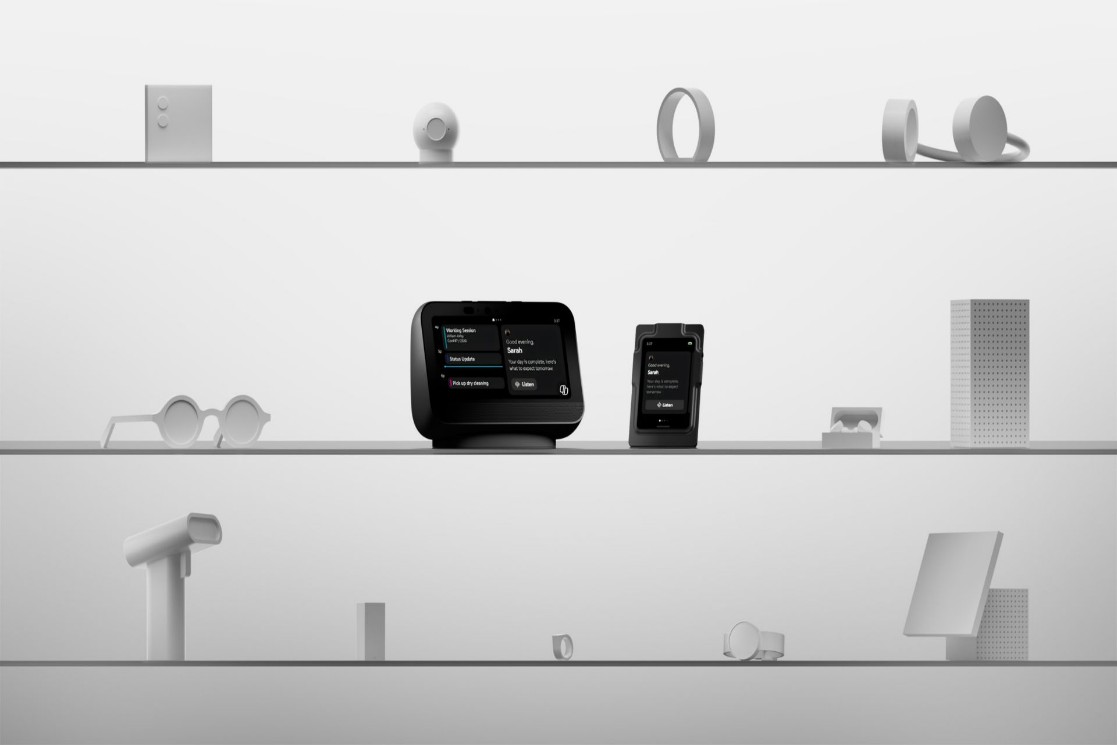
Figure 1. Agentic devices powered by Solara OS.
Built on Android rather than Windows, Solara is optimized for a new category of AI-focused hardware. The platform is designed to support continuous interactions with intelligent agents, enabling users to access information, complete tasks, and manage workflows more naturally through voice, touch, and contextual awareness.
To demonstrate the concept, Microsoft showcased two prototype devices. The first is a smart desktop display that uses facial recognition for authentication and provides direct access to AI-powered workplace tools. Users can review schedules, access documents, and interact with Microsoft 365 services without navigating traditional software interfaces. Figure 1 shows agentic devices powered by Solara OS.
The second prototype is a wearable badge equipped with a touchscreen, camera, and fingerprint scanner. Designed for mobile use, the device allows users to activate an AI assistant with a single button press. During demonstrations, the badge recorded conversations, generated instant transcriptions, and used its camera to analyze surroundings and provide context-aware responses.
Alongside Solara, Microsoft introduced Scout, a persistent AI assistant designed for the Microsoft 365 ecosystem. Scout can connect with calendars, emails, and productivity tools while learning from user interactions over time. By adapting to individual preferences and work habits, the assistant aims to become a personalized digital companion capable of automating routine tasks and improving productivity.
Although Microsoft does not plan to sell the prototype devices itself, the company hopes hardware manufacturers will build products based on the Solara platform [1]. Together, Solara and Scout offer a glimpse into a future where intelligent AI agents replace many of today's app-centric workflows, fundamentally changing how people interact with computers and digital services.
Reference:
- https://interestingengineering.com/ai-robotics/project-solara-os-microsoft
Cite this article:
Keerthana S (2026), Microsoft Reimagines Computing with the Launch of Solara OS, AnaTechMaz, pp.462
Recent Post
-

Tiny Nanolaser Breakthrough Could Transform the Future of Computing
Researchers have developed an ultra-compact nanolaser that could fundamentally ...
-
Microscopic Spotlight Effect Achieved with Ultra-Thin Device
The device developed at CUNY is the first to combine two key advantages for nonlinear light ...
-

Researchers Discover “Mouse Bite” Flaws Hidden Within Computer Chips
For decades, tiny imperfections have posed major ...
-

Physicists Discover Big Bang’s Primordial Matter Behaved Like a Liquid
Quark–gluon plasma (QGP) is believed to be the very first ...
-

Scientists Create Atom-Scale Gates That Mimic Living Cell Behavior
In living cells, ions move through specialized protein channels embedded in the cell...
-

Scientists Challenge Decades-Old Understanding of Turbulence
Earlier research by Fang showed that microscopic swimmers can influence large-scale ocean currents...
-

Next-Generation Aerospace Composite Promises Superior Strength and Durability
A Texas-based materials company has filed a patent for a next....
-

Scientists Achieve Record-Breaking Superconductivity Under Normal Pressure
Superconductors already play a crucial role in technologies like.....
-

Colder Than Deep Space: Scientists Push Temperatures Near Absolute Zero in the Search for Dark Matter
Researchers at the University of Minnesota engineered...
-
Researchers Develop Robust Wireless System for Next-Generation Bioelectronic Implants
Researchers have developed a new magnetoelectric...
-
26-Billion-Parameter AI Models Now Run on Standard PCs
Phison has unveiled aiDAPTIV, a new memory extension technology designed to help everyday PCs run...
-
Microsoft Reimagines Computing with the Launch of Solara OS
Microsoft has unveiled Project Solara, a new operating system designed for a future where AI agents...
-
New Meta-Operators Advance Wireless Optical Image Processing
Researchers have developed a groundbreaking optical computing technology that...
-

AI-Powered Vaccine Development Scores Early Win in Human Trials
A pioneering vaccine platform developed by researchers at University of Cambridge and...
-
Flying Car Industry Eyes Solid-State Batteries to Achieve Commercial Takeoff
As the flying car industry shifts from experimental prototypes to ...