

Michael Dell Declares VxRail “No Longer a Thing” as VMware Faces Rising Competition
Dell CEO Michael Dell has delivered a blunt assessment of the company’s hyperconverged infrastructure platform, VxRail, describing it as “no longer a thing” in the evolving enterprise IT landscape. Speaking with CRN, Dell noted that while VxRail was once central to Dell’s virtualization strategy, its relevance has waned in recent years as Dell’s own storage and cloud offerings gained traction.
Despite the CEO’s remarks, Dell has reassured customers that VxRail support will continue, with the company emphasizing its commitment to enabling partners and enterprises to transition workloads seamlessly to other Dell solutions. “Customers are seeking greater hypervisor flexibility, so we’re making it easier for partners to transition their customers to other Dell offerings,” a Dell spokesperson told SDxCentral.
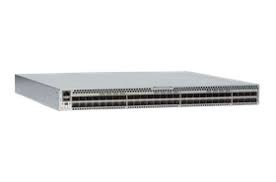
Figure 1. VxRail.
The Rise and Evolution of VxRail
Launched in 2016 as a successor to VSPEX Blue, VxRail combined compute, storage, and networking resources into a single integrated platform. A hyperconverged iteration debuted at VMworld 2017 alongside Dell’s VxRack software-defined rack-scale systems. Over time, the platform added features such as dynamic nodes for independent scaling of compute and storage, as well as support for VMware NSX-T and Tanzu. Figure 1 shows VxRail.
However, a series of industry shake-ups have reshaped VxRail’s role. Broadcom’s 2024 acquisition of VMware, coupled with changes to licensing structures and the end of perpetual VMware licenses, disrupted the traditional virtualization ecosystem [1]. Meanwhile, Dell’s own PowerFlex software-defined storage and private cloud solutions have surged in popularity, reducing dependence on converged offerings like VxRail.
Strategic Partnerships and Alternative Solutions
Earlier this year, Dell teamed up with Nutanix to offer a hybrid cloud solution combining Nutanix’s Cloud Platform and AHV hypervisor with Dell’s PowerFlex storage. This collaboration targets enterprises seeking VxRail-style flexibility for independently scaling compute and storage, essentially providing an alternative for organizations reconsidering VMware deployments.
Other vendors, including Veeam and OpenNebula, are also positioning themselves to benefit from shifting customer preferences. Gartner has projected that VMware could lose up to 35% of its workloads by 2028, highlighting opportunities for hyperscale providers and competitors.
Similarly, IBM recently announced it would stop deploying new VMware environments in favor of its Red Hat offerings, signaling a broader trend of enterprise IT moving away from traditional VMware solutions.
VMware’s Position Amid the Shake-Up
Despite the turbulence, VMware appears resilient. At its recent Explore event, Broadcom CEO Hock Tan highlighted that over 90% of VMware’s top 10,000 customers have adopted Cloud Foundation (VCF) and its subscription licensing model. The vendor has also simplified hardware requirements, lowering configurations for vSAN storage and hyperconverged clusters—reducing RAM by up to 67% and CPU cores by 33% in certain ReadyNodes. These changes could make VMware more accessible to enterprises navigating cost pressures.
The Outlook
Michael Dell’s candid comments underscore a broader shift in the hyperconverged and virtualization market. While VxRail may no longer be the centerpiece it once was, Dell continues to position itself with flexible storage, private cloud, and strategic partnerships. For VMware, the challenge will be maintaining growth and customer loyalty amid rising competition, evolving licensing models, and a market increasingly seeking agility and cost efficiency.
References
- https://www.sdxcentral.com/news/michael-dell-calls-vxrail-less-of-a-thing-amid-dells-own-storage-growth/
Cite this article:
Keerthana S (2025), Michael Dell Declares VxRail “No Longer a Thing” as VMware Faces Rising Competition, AnaTechMaz, pp.177
Recent Post
-
AWS Expands Cloud Services with New Zealand Region Launch
Amazon Web Services (AWS) has officially opened its Asia Pacific (New Zealand) Region, investing over...
-

Massive AWS Outage Knocks Out Alexa, Fortnite, and Other Major Services
A major Amazon Web Services (AWS) outage has disrupted numerous...
-

Broadcom CEO Calls for Shift from Cloud Back to on-Premises Infrastructure
Broadcom CEO Hock Tan kicked off the VMware Explore conference in ...
-

Network and Cloud Impact of Agentic AI
Traditionally, enterprises have treated AI as a specialized component within specific business processes—far...
-

Why Cloud and AI Projects Stall — And How to Get Them Back on Track
Organizations point to three main reasons these projects drag on, ...
-

Anthropic Lands $1 Billion Partnership with Google Cloud
US-based AI firm Anthropic has inked a major agreement with Google Cloud, reportedly worth tens of billions....
-
After Recent Outage, AWS Introduces Automated Incident Reporting in CloudWatch
CloudWatch is AWS’s monitoring and observability service, designed to...
-
AWS Surpasses Wall Street Forecasts Amid Strong Demand for Cloud Infrastructure
Amazon’s cloud infrastructure service, Amazon Web Services (AWS),...
-
European Cloud Watchdog Says Broadcom Won’t Reverse Steep VMware Price Hikes
Broadcom continues to pressure VMware customers into...
-
Google Introduces “Private AI Compute” to Deliver Cloud-Scale Power While Safeguarding Privacy
In the current AI landscape, devices such as smartphones...
-
NATO Adopts Google’s Sovereign Air-Gapped Cloud to Power AI-Driven Defense Operations
NATO has announced a significant modernization effort, signing a ...
-
Michael Dell Declares VxRail “No Longer a Thing” as VMware Faces Rising Competition
Dell CEO Michael Dell has delivered a blunt assessment of the ...
-

React2Shell Vulnerability Puts Nearly 40% of Cloud Deployments at Risk of Remote Code Execution
A newly discovered critical flaw in React Server Components,...
-
Docker Hardened Images Are Now Open Source and Free to Use
More than 1,000 Docker Hardened Images (DHI) are now freely available and open source under the....
-

Microsoft Pushes Agentic AI for Cloud Management, Analysts Remain Skeptical
Microsoft is making a major push with agentic AI to streamline and ....