

Google Introduces “Private AI Compute” to Deliver Cloud-Scale Power While Safeguarding Privacy
In the current AI landscape, devices such as smartphones and Chromebooks can handle basic on-device tasks like translation, audio summaries, and simple chat responses. But as AI advances into more demanding areas—multimodal reasoning, proactive assistance, and larger models—the computing requirements exceed what local hardware can deliver. Google’s solution is to shift the heavy processing to the cloud while maintaining privacy standards equivalent to processing data directly on the device.
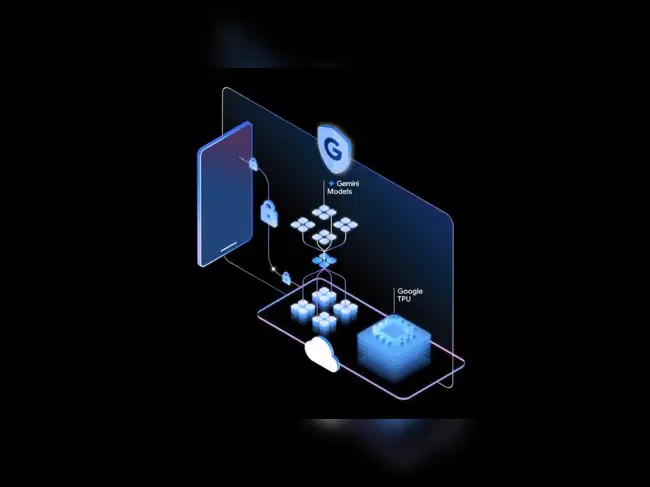
Figure 1. ‘Private AI Compute’.
The key takeaway: AI is evolving from straightforward question-and-answer interactions to systems that anticipate user needs, all without compromising the trust that users expect when handling sensitive data. Figure 1 shows ‘Private AI Compute’.
Strategically, Google’s approach highlights an industry-wide dilemma: on-device AI offers strong privacy but limited scale, whereas cloud-based AI provides greater capability at the cost of increased privacy risks. Google positions its new architecture as a middle-ground solution, bridging the two extremes by controlling the full stack and using secure, hardware-driven isolation. As global regulations tighten around data usage, powerful AI systems with proven privacy guarantees could become a major competitive advantage.
Although Google has shared technical details about the architecture and security safeguards, real-world confidence will depend on independent audits validating its claim that “not even Google can access your data,” as well as how performance, cost, network reliability, and latency measure up [1]. Regions with weak connectivity or stricter compliance environments may face constraints, making adoption uneven. Industries prioritizing data protection will watch closely.
Ultimately, Private AI Compute is more than a product announcement—it signals Google’s belief that the future of AI for consumers and enterprises requires both the scalability of the cloud and the security assurances of on-device systems.
References
- https://economictimes.indiatimes.com/ai/ai-insights/google-unveils-private-ai-compute-to-unlock-cloud-power-preserving-your-privacy/articleshow/125459136.cms
Cite this article:
Keerthana S (2025), Google Introduces “Private AI Compute” to Deliver Cloud-Scale Power While Safeguarding Privacy, AnaTechMaz, pp.175
Recent Post
-
AWS Expands Cloud Services with New Zealand Region Launch
Amazon Web Services (AWS) has officially opened its Asia Pacific (New Zealand) Region, investing over...
-
Massive AWS Outage Knocks Out Alexa, Fortnite, and Other Major Services
A major Amazon Web Services (AWS) outage has disrupted numerous...
-

Broadcom CEO Calls for Shift from Cloud Back to on-Premises Infrastructure
Broadcom CEO Hock Tan kicked off the VMware Explore conference in ...
-

Network and Cloud Impact of Agentic AI
Traditionally, enterprises have treated AI as a specialized component within specific business processes—far...
-

Why Cloud and AI Projects Stall — And How to Get Them Back on Track
Organizations point to three main reasons these projects drag on, ...
-
Anthropic Lands $1 Billion Partnership with Google Cloud
US-based AI firm Anthropic has inked a major agreement with Google Cloud, reportedly worth tens of billions....
-
After Recent Outage, AWS Introduces Automated Incident Reporting in CloudWatch
CloudWatch is AWS’s monitoring and observability service, designed to...
-
AWS Surpasses Wall Street Forecasts Amid Strong Demand for Cloud Infrastructure
Amazon’s cloud infrastructure service, Amazon Web Services (AWS),...
-
European Cloud Watchdog Says Broadcom Won’t Reverse Steep VMware Price Hikes
Broadcom continues to pressure VMware customers into...
-
Google Introduces “Private AI Compute” to Deliver Cloud-Scale Power While Safeguarding Privacy
In the current AI landscape, devices such as smartphones...
-
NATO Adopts Google’s Sovereign Air-Gapped Cloud to Power AI-Driven Defense Operations
NATO has announced a significant modernization effort, signing a ...
-
Michael Dell Declares VxRail “No Longer a Thing” as VMware Faces Rising Competition
Dell CEO Michael Dell has delivered a blunt assessment of the ...
-

React2Shell Vulnerability Puts Nearly 40% of Cloud Deployments at Risk of Remote Code Execution
A newly discovered critical flaw in React Server Components,...
-
Docker Hardened Images Are Now Open Source and Free to Use
More than 1,000 Docker Hardened Images (DHI) are now freely available and open source under the....
-
Microsoft Pushes Agentic AI for Cloud Management, Analysts Remain Skeptical
Microsoft is making a major push with agentic AI to streamline and ....