

Scientists Uncover a New Space-Time Limit Beyond Heisenberg
Scientists have identified a previously unknown quantum limit that makes it impossible to determine an electron’s exact position and timing at the same time. Building on Heisenberg’s uncertainty principle, the discovery shows that this fundamental restriction is not caused by measurement tools but is an inherent feature of the quantum world.
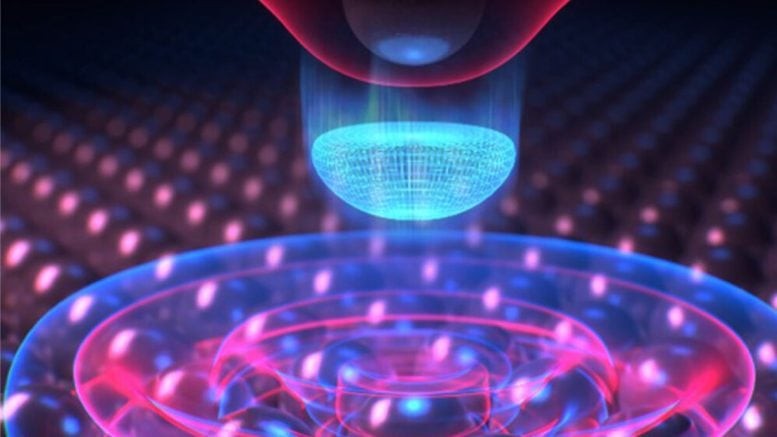
Figure 1. Visualization of an Attosecond Electron Pulse.
Researchers have discovered a previously unknown quantum boundary that limits how precisely an electron's position and timing can be measured simultaneously. In a collaborative study, scientists from the Regensburg Center for Ultrafast Nanoscopy and the Max Planck Institute identified this new "space-time limit," revealing a fundamental constraint on tracking electron motion across space and time. Figure 1 shows Visualization of an Attosecond Electron Pulse.
The study reveals a fundamental quantum tradeoff: increasing the precision of an electron's timing causes its quantum wave packet to become less localized in space. In other words, achieving greater accuracy in one aspect inevitably reduces precision in the other.
The Importance of Watching Electrons
Many emerging technologies, including faster computer chips, quantum computing, advanced energy materials, and precision chemistry, rely on understanding electron behavior at incredibly small scales and ultrafast speeds. To capture this motion, scientists use attosecond-resolution techniques, as conventional microscopes cannot record such rapid changes. Researchers at the Regensburg Center for Ultrafast Nanoscopy have now pushed these capabilities further, tracking electron motion despite electrons moving about a thousand times faster than atoms and molecules.
Tracking Electrons in Attoseconds
To track electron motion, researchers developed a laser system that generates precisely timed light pulses, allowing them to monitor electrons moving between an atomically sharp metal tip and a nearby silver surface. By adjusting the delay between the pulses and measuring the resulting current, the team reconstructed the timing of electron transfer. Their observations confirmed that electrons behave as quantum waves rather than tiny particles following fixed paths.
Capturing Quantum Tunneling on Film
Researchers captured quantum tunneling with attosecond precision, revealing exactly when electrons pass through energy barriers that classical physics says they cannot cross. Using ultrafast measurements and quantum simulations, the team found that electron wave packets experience a slight delay of about 500 attoseconds in responding to laser pulses, offering new insight into the dynamics of quantum tunneling.
A New Space-Time Tradeoff Revealed
The study revealed a new quantum space-time tradeoff, showing that measuring an electron’s timing with greater precision requires more energy, causing its wave packet to spread over a larger region of space. The findings also highlight the dual wave-particle nature of light, demonstrating that both wave and photon descriptions are needed to explain electron behavior at ultrafast quantum scales.
Measuring the Quantum Space-Time Tradeoff
By using a single atom to briefly confine an electron's wave packet, researchers directly measured the relationship between an electron's spatial confinement and its timing precision. The experiments showed that atomic-scale imaging remains possible even under intense laser excitation, enabling scientists to explore the newly identified space-time limit and study how ultrafast electron motion influences the shape and spread of an electron's wave function.
Implications for Future Technology
The discovery could have far-reaching applications beyond fundamental physics. Ultra-concentrated electron pulses may one day enable scientists to precisely control chemical reactions by targeting specific atomic bonds at exact moments [1]. The findings could also pave the way for next-generation electronics and quantum information technologies that operate at the natural speed of electron motion—potentially hundreds of thousands of times faster than today's CMOS-based devices.
References:
- https://scitechdaily.com/beyond-heisenberg-scientists-discover-a-new-space-time-limit-in-quantum-physics/
Cite this article:
Janani R (2026), Scientists Uncover a New Space-Time Limit Beyond Heisenberg, AnaTechMaz, pp.545.
Recent Post
-

Researchers Crack a “Quantum-Only” Problem Using a Standard Laptop
Researchers at the Flatiron Institute and Boston University....

A Transistor That Acts Like a Brain Cell in Extreme Cold
Researchers at the University of Hong Kong have developed a brain-inspired transistor that operates at....

New Quantum Sensor Reveals the Invisible Universe
A UK-led collaboration has achieved a major milestone in quantum sensing by demonstrating that a...

Scientists Gain New Control Over Quantum Light
Researchers at the University of Technology Sydney have discovered that simply twisting stacked....
Scientists Uncover a New Space-Time Limit Beyond Heisenberg
Scientists have identified a previously unknown quantum limit that makes it impossible to determine an...
-

First Superconducting Quantum Heat Engine Could Revolutionize Quantum Computing
Researchers at Aalto University have created the first cyclic quantum....