

A Transistor That Acts Like a Brain Cell in Extreme Cold
Researchers at the University of Hong Kong have developed a brain-inspired transistor that operates at temperatures near absolute zero, where it can mimic the behavior of a brain cell. This breakthrough may help overcome key challenges in quantum computing and could also enable new technologies for future deep-space exploration systems.
Scientists from the University of Hong Kong’s Department of Electrical and Computer Engineering and the Centre for Advanced Semiconductors and Integrated Circuits (CASIC) developed the programmable neuromorphic platform. Designed to operate in ultra-cold environments, the technology could offer a practical solution for improving the scalability and efficiency of future quantum computers.

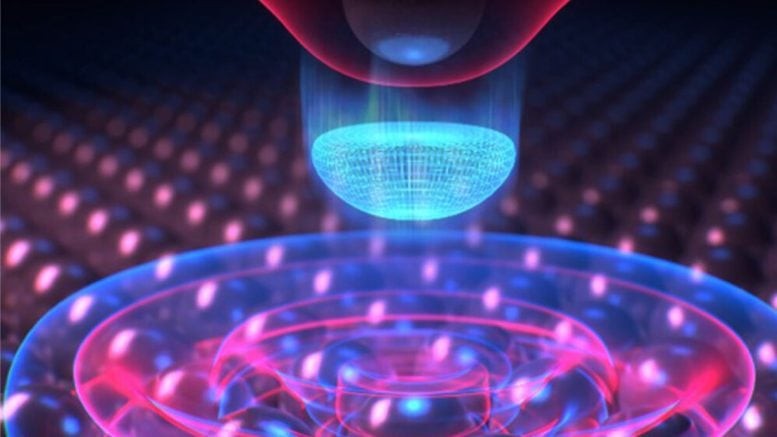
Figure 1. Brain-Inspired Chip for Quantum Computing.
Brain-Inspired Computing Near Absolute Zero
Led by Professor Yuhao Zhang and PhD student Xin Yang, the research team developed a new way to generate and control negative differential resistance (NDR) in standard silicon carbide (SiC) MOSFETs. Using this technique, they showed that a single transistor can mimic the energy-efficient “spiking” behavior of biological neurons at temperatures as low as 10 millikelvin. Because quantum computers operate under similar ultra-cold conditions, the technology could enable low-power control circuits to be placed much closer to delicate qubits, reducing wiring complexity, lowering heat generation, and improving the scalability of future quantum computing systems. Figure 1 shows Brain-Inspired Chip for Quantum Computing.
Silicon Carbide Exhibits Unique Cryogenic Behaviour
The researchers discovered that silicon carbide (SiC) MOSFETs exhibit a distinctive S-shaped negative differential resistance (NDR) when cooled below 2 kelvin, driven by electron-donor impact ionization (EDII). Because this effect arises from the material’s intrinsic atomic structure rather than heat-dependent processes, it remains stable and highly reproducible across manufacturing batches. The team says the approach is also scalable, as SiC is already widely manufactured for electric vehicles and power grid applications, allowing cryogenic chips to be produced using existing industrial fabrication facilities.
Toward Scalable Quantum Systems and Deep-Space Missions
The researchers demonstrated that the artificial neuron transistors can be connected into larger networks, enabling more sophisticated data processing in cryogenic environments. Such systems could enhance quantum error correction and real-time control in future quantum computers [1]. Beyond quantum computing, the technology may also benefit deep-space missions, where electronic systems must operate reliably in the extreme cold found on the Moon and in the outer regions of the solar system.
References:
- https://scitechdaily.com/near-absolute-zero-this-transistor-starts-acting-like-a-brain-cell/
Cite this article:
Janani R (2026), A Transistor That Acts Like a Brain Cell in Extreme Cold, AnaTechMaz, pp.542.
Recent Post
-

Researchers Crack a “Quantum-Only” Problem Using a Standard Laptop
Researchers at the Flatiron Institute and Boston University....
A Transistor That Acts Like a Brain Cell in Extreme Cold
Researchers at the University of Hong Kong have developed a brain-inspired transistor that operates at....

New Quantum Sensor Reveals the Invisible Universe
A UK-led collaboration has achieved a major milestone in quantum sensing by demonstrating that a...

Scientists Gain New Control Over Quantum Light
Researchers at the University of Technology Sydney have discovered that simply twisting stacked....
Scientists Uncover a New Space-Time Limit Beyond Heisenberg
Scientists have identified a previously unknown quantum limit that makes it impossible to determine an...
-

First Superconducting Quantum Heat Engine Could Revolutionize Quantum Computing
Researchers at Aalto University have created the first cyclic quantum....