

Inside The Ambitious Mission That Could Reshape the Future of Human Civilization
Humanity is preparing for one of the most extraordinary missions ever attempted — establishing a permanent human presence beyond Earth. What began as a dream of space exploration is now evolving into a global effort to build the technologies, infrastructure, and systems needed for long-term life on the Moon and eventually Mars.
Space agencies like NASA, along with private aerospace companies and international partners, are leading a mission that could fundamentally change the future of human civilization. The objective is no longer limited to short visits to space. Scientists and engineers are now working toward creating sustainable off-world communities capable of supporting human life for years or even generations.
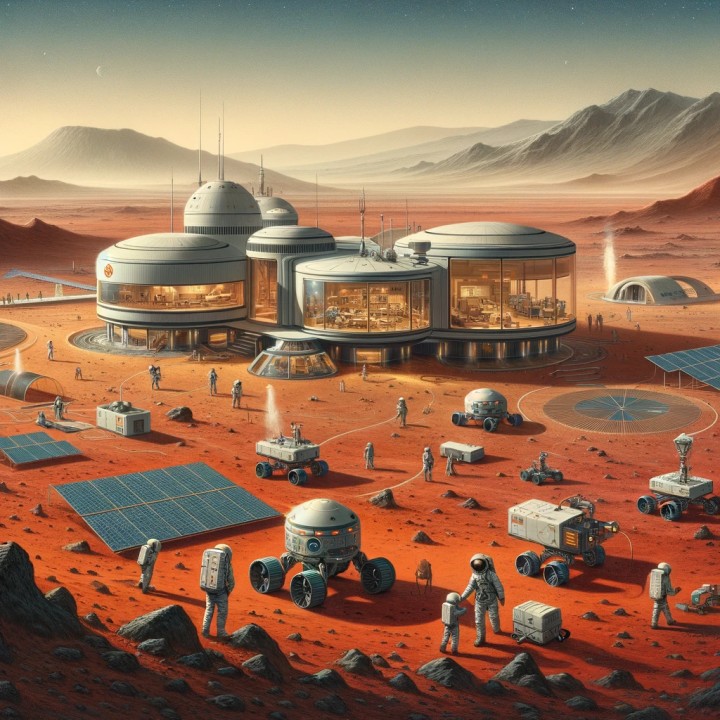
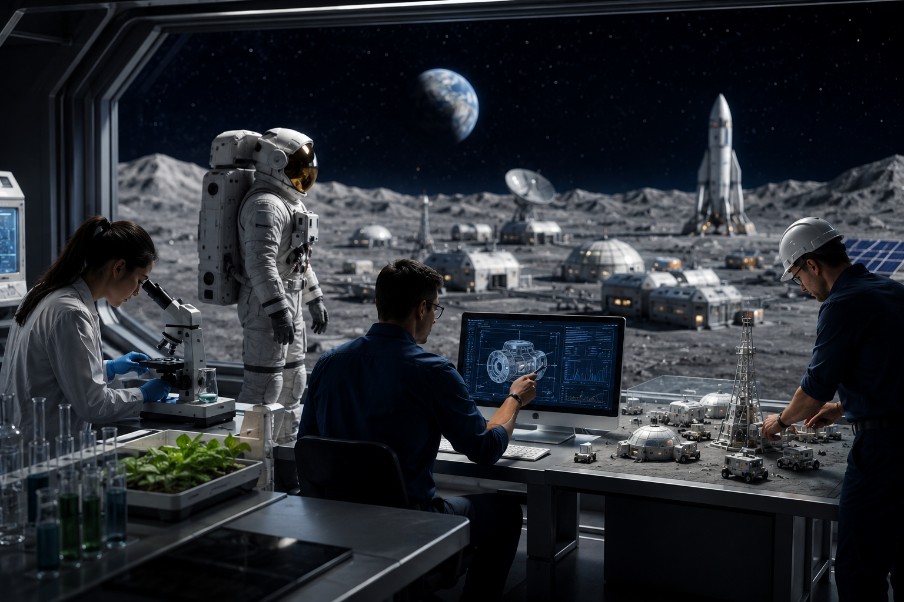
Figure 1. Future of Human Civilization.
Building Humanity’s First Off-World Home
At the center of this mission is the development of advanced lunar habitats. These living spaces are being designed to protect astronauts from dangerous radiation, extreme temperatures, and the harsh conditions of space. Figure 1 shows future of human civilization.
Future settlements may include research laboratories, communication systems, energy stations, transportation hubs, and even food production facilities. Engineers are exploring ways to use lunar soil and 3D-printing technology to construct buildings directly on the Moon, reducing the need to transport large amounts of material from Earth. Scientists also believe frozen water near the Moon’s south pole could provide drinking water, oxygen, and hydrogen fuel for future missions, making long-term survival more realistic.
Technology Driving the Space Age
Artificial intelligence, robotics, and automation are expected to play major roles in building future lunar infrastructure. Autonomous robots could prepare landing zones, construct habitats, repair equipment, and perform dangerous tasks before humans arrive. At the same time, advanced AI systems may help monitor life-support systems, energy usage, communication networks, and environmental safety across entire lunar settlements. Reusable spacecraft, high-efficiency solar power systems, and next-generation communication technologies are also transforming how humans may live and work beyond Earth.
Preparing Humans for Life in Space
Living beyond Earth presents enormous physical and psychological challenges. Astronauts must adapt to low gravity, isolation, radiation exposure, and long periods away from Earth. Researchers are conducting experiments aboard space stations and simulation centers to study how the human body reacts to extended space missions. These studies are helping scientists develop medical systems, exercise programs, and mental health support strategies for future lunar and Martian residents.
A Gateway to the Future
The Moon is widely viewed as a stepping stone toward deeper space exploration. Technologies tested during lunar missions could later support human journeys to Mars and beyond.
Many experts believe future Moon bases could eventually become launch centers for interplanetary missions, scientific research, resource mining, and commercial space operations [1]. Private companies are already investing heavily in reusable rockets, lunar transportation systems, and space tourism, signaling the beginning of a new space economy that may reshape industries on Earth as well.
Redefining Human Civilization
This ambitious mission represents far more than scientific achievement. It reflects humanity’s desire to explore, survive, and expand beyond the limits of a single planet. Every rocket launch, robotic mission, and technological breakthrough moves civilization closer to a future where humans may live across multiple worlds. What once seemed impossible is rapidly becoming one of the defining transformations of the modern age.
In the coming decades, humanity may look back on this era as the beginning of a new civilization — one that reached beyond Earth and opened the door to life among the stars.
References:
- https://www.linkedin.com/pulse/86-mars-next-frontier-human-settlement-tiago-vasconcelos-ywuue
Cite this article:
Keerthana S (2026), NASA’s 2032 Vision: Building a City-Sized Moon Base, AnaTechMaz, pp.5.
NASA’s 2032 Vision: Building a City-Sized Moon Base
(EPISODE 'S)
-
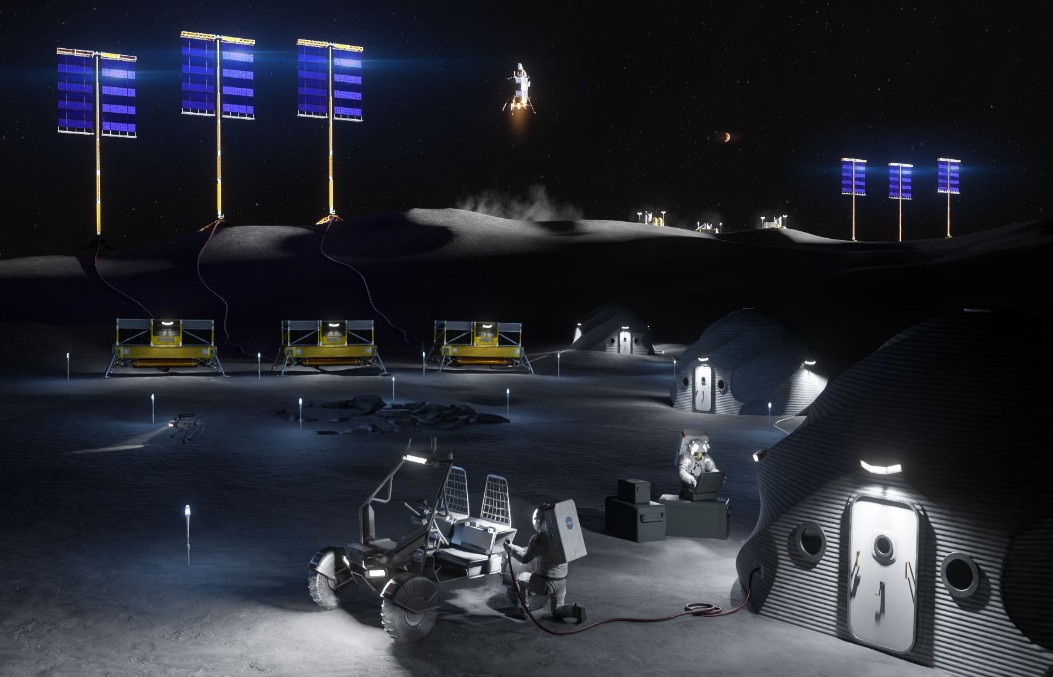
How NASA Plans to Turn the Moon into Humanity’s Next Permanent Home
For decades, the Moon was viewed as a distant destination...(Episode: 01)
-
Exploring The Technology, Challenges, and Future of Living Beyond Earth
For centuries, humanity has looked toward the stars and...(Episode: 02)
-
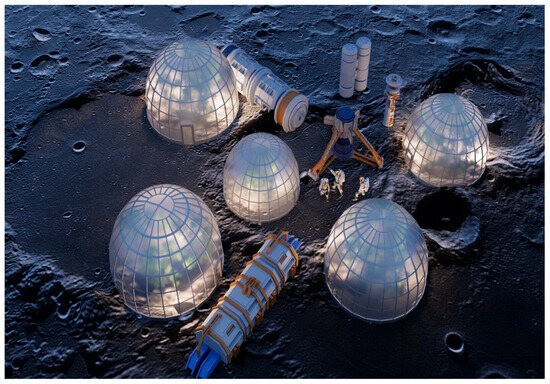
From Lunar Habitats to Space Infrastructure — The Roadmap to a Moon City
Humanity stands on the edge of one of the greatest...(Episode: 03)
-
Scientists, Astronauts, and Engineers Prepare for A New Era of Space Living
Humanity is entering a bold new chapter in space...(Episode: 04)
-
Inside The Ambitious Mission That Could Reshape the Future of Human Civilization
Humanity is preparing for one of the most extraordinary...(Episode: 05)