

Scientists Reveal the Cosmic Conveyor Belt: The Grand Journey of Carbon Across the Universe
The Vital Role of Carbon and Stellar Origins
Life on Earth relies on carbon, but this element itself is born in the hearts of stars. Almost all elements heavier than hydrogen and helium, including carbon, oxygen, and iron, are forged in the extreme heat within stellar cores. When stars reach the end of their lives, they disperse these elements into space. Through a fascinating process of cosmic recycling, planets like Earth take shape by incorporating these stellar byproducts, such as the iron in Earth's core, the oxygen in its atmosphere, and the carbon that forms the basis of all living organisms.

Figure 1. The Cosmic Conveyor Belt: Unveiling the Grand Journey of Carbon Across the Universe.
Galactic Recycling: The Journey of Carbon
Researchers from the U.S. and Canada have confirmed that carbon and other elements created in stars don’t merely drift aimlessly through space awaiting reuse. In galaxies like ours, where stars continue to form, these elements follow a complex path. They travel along immense currents stretching deep into intergalactic space before looping back to their original galaxy. This phenomenon, known as the circumgalactic medium, functions like a massive conveyor belt, expelling material from the galaxy and eventually drawing it back. Gravity and other forces then shape this recycled matter into new planets, moons, asteroids, comets, and even stars. Figure 1 shows The Cosmic Conveyor Belt: Unveiling the Grand Journey of Carbon Across the Universe.
The Circumgalactic Medium: A Galactic Conveyor Belt
“Imagine the circumgalactic medium as a giant train station: It constantly pushes material out and pulls it back in,” explained Samantha Garza, a University of Washington doctoral candidate and team member. “The heavy elements forged by stars are expelled from their home galaxy during explosive supernovae and travel through the circumgalactic medium, only to be pulled back in, continuing the cycle of star and planet formation.”
The study of the circumgalactic medium (CGM) offers valuable insights into the long-term evolution of galaxies. As galaxies age, their ability to maintain star formation can wane, partly due to the slowing or eventual breakdown of the CGM's recycling process. If the medium can no longer effectively circulate material back into the galaxy, star formation could decline, leading to a decrease in stellar populations over time. This theory suggests that the continued cycling of material — from within the galaxy to the circumgalactic space and back again — is crucial to sustaining star formation over billions of years.
To explore this cosmic recycling in detail, the team used the Cosmic Origins Spectrograph (COS) on the Hubble Space Telescope. This spectrograph observed how light from nine distant quasars was influenced by the circumgalactic medium of 11 star-forming galaxies. The light from the quasars was partially absorbed by the carbon in the CGM, revealing its presence in large quantities. Some of this carbon extended an astonishing 400,000 light-years from the galaxies, which is four times the diameter of the Milky Way. This discovery underscores the immense scale of the circumgalactic medium and its role in the galaxy's material cycle.
The study emphasizes the importance of the CGM not only for fueling new stars but also for understanding how galaxies evolve over cosmic time, particularly as they face the eventual decline of star formation. The findings could shape future research on galaxy lifecycle and the distribution of elements across the universe.
The Cosmic Reservoir – Understanding the Circumgalactic Medium
In the first part of this series, we dive into the concept of the circumgalactic medium (CGM), the vast cloud of material surrounding star-forming galaxies. Once thought to contain only hot gases enriched in oxygen, recent research has revealed that the CGM also harbors carbon. This discovery paints the circumgalactic medium as a cosmic reservoir — a massive storage system for essential elements like carbon and oxygen. These elements, circulating through the medium, are recycled back into the galaxy, fueling the birth of new stars and sustaining the lifecycle of the galaxy. By studying the CGM, scientists are unraveling the mechanisms that sustain galaxies over long periods of time.
The Cosmic Recycling Process – Pushing and Pulling Material
In the second part, we explore how the circumvallate medium facilitates the recycling of materials within a galaxy. Through a process of outflow and inflow, elements like carbon and oxygen are expelled from the galaxy through events such as supernovae and stellar winds, only to fall back into the galaxy’s gravitational pull over time. This recycling system ensures a constant supply of the raw materials needed for star formation. If this process were to slow down or break down, galaxies could face a decline in star formation, leading to a gradual fading of stellar populations. Understanding this cosmic conveyor belt helps scientists predict the future of galaxy evolution, including the eventual decline of star formation.
Probing the Cosmic Conveyor Belt – The Role of the Hubble Space Telescope
The third part of the series focuses on how scientists are observing and studying this cosmic recycling process. Using the Cosmic Origins Spectrograph (COS) aboard the Hubble Space Telescope, researchers have observed how light from distant quasars is absorbed by the circumgalactic medium of galaxies. The spectrograph’s readings revealed that carbon, in large quantities, is present in the CGM, sometimes extending up to 400,000 light-years from the galaxy—far beyond the boundaries of the galaxy itself. These observations offer critical insights into the vastness and importance of the circumgalactic medium as a reservoir for material that fuels future generations of stars. With the help of Hubble, scientists are mapping this cosmic journey of carbon across the universe, helping us understand the intricate dance of recycling that sustains galaxies.
Each part of this series showcases a crucial piece of the cosmic puzzle, revealing how elements like carbon travel across the universe, from galaxies to intergalactic space and back again. This journey not only helps us understand the past and present of galaxies but also provides clues about their future.
Source: SciTECHDaily
Cite this article:
Priyadharshini S (2025), "Scientists Reveal the Cosmic Conveyor Belt: The Grand Journey of Carbon Across the Universe", AnaTechMaz, pp. 186
Recent Post
-

Blue Ghost Unveils NASA’s Advanced Lunar Technology
Firefly’s Blue Ghost Mission 1 has made a major stride toward the Moon, successfully ...
-
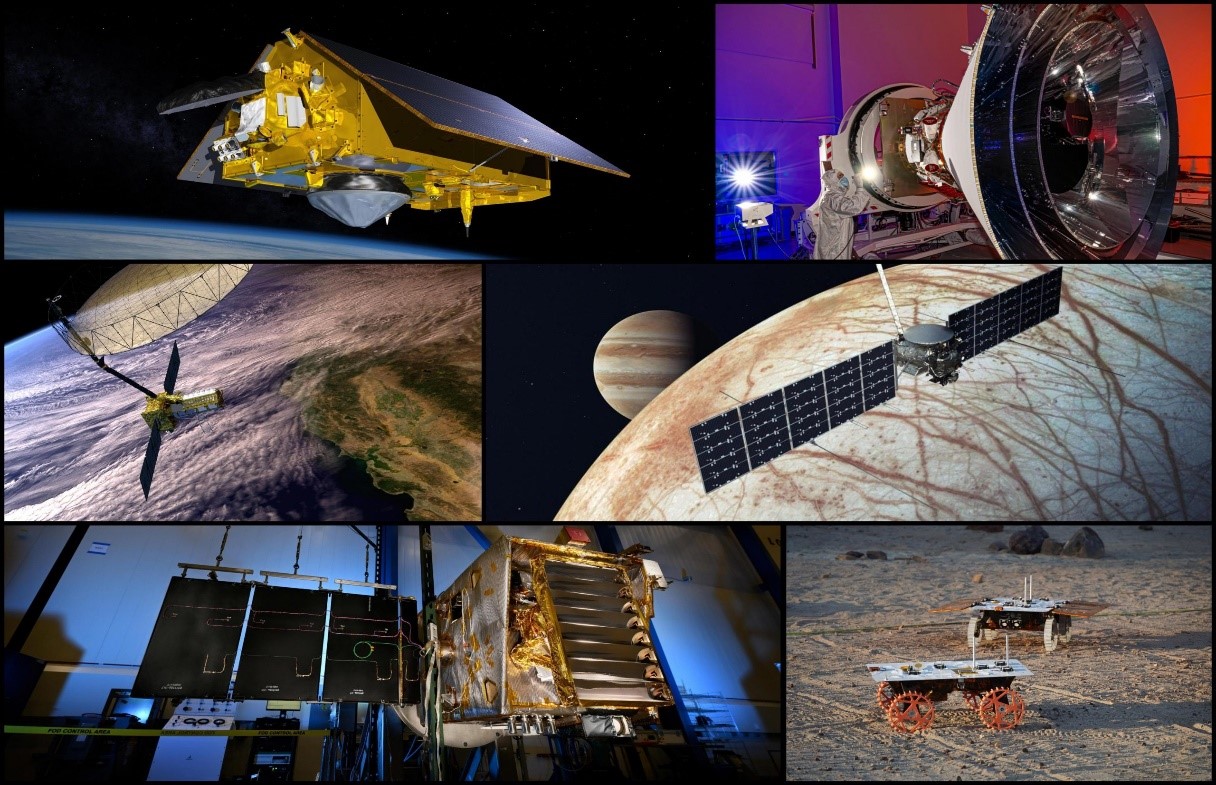
NASA JPL’s 2025 Missions: Leading the Future of Space Exploration
NASA JPL is embarking on an eventful 2025 with ambitious...
-

NASA's OSIRIS-REx Mission Hints at New Clues to Life’s Origins
NASA and its collaborators have released the first findings from ...
-

Astronomers Amazed by the Unusual Planetary System of WASP-132
Astronomers have made a groundbreaking discovery in the WASP-132...
-

NASA Astronauts Discover Key Insights into Life in Space Ahead of Major Spacewalks
Pettit focused on human biology by collecting saliva, blood....
-
Scientists Reveal the Cosmic Conveyor Belt: The Grand Journey of Carbon Across the Universe
Life on Earth relies on carbon, but this element itself is born in the hearts.....
-

NASA's Bold Strategy to Uncover Evidence of Life on Mars
NASA has introduced a new dual-path approach to...
-

Stunning Discovery by The Webb Telescope: Hidden Stars Halfway Across the Universe
Seeing individual stars halfway across the observable universe was once.....
-

Dark Matter Unveils the Mystery Behind the Milky Way's Stellar Streams
Physicists have shed light on the long-standing enigma of...
-

Don't Miss: Epic Sky Spectacle as Mars Aligns with The Wolf Moon
The next full Moon will grace the night sky on Monday evening...
-

NASA’s Artemis I Orion Spacecraft Arrives Back at Kennedy Space Center
The Artemis I Orion crew module, now designated as the ...
-

Firefly's Blue Ghost Mission Unveils Breathtaking First Image on Its Journey to The Moon
Six NASA payloads on the flight, including the Radiation...
-

Mapping The Sun’s Invisible Shield: NASA’s IMAP Mission To Explore the Heliosphere
On December 3, 2024, NASA achieved a significant milestone by completing the ...
-

Mysterious Space Signal Traced Back to An Ancient, Dead Galaxy Across the Universe
In an extraordinary discovery, astronomers have pinpointed the origin of a fast...
-

Scientists Reveal Breathtaking New Images of Hidden Exocomet Belts Surrounding 74 Nearby Stars
Astrophysicists from Trinity College Dublin have successfully captured images.....