

Lemon-Inspired Stretchable Battery Boosts Voltage and Extends Lifespan
The battery uses gelatin as the electrolyte and magnesium and molybdenum as electrodes—both relatively safe elements that can naturally degrade in soil. On its own, magnesium tends to form a layer that blocks reactions between the electrolyte and the electrode, limiting performance, explained PhD student Junzhi Liu, who conducted battery testing for the study published in Advanced Energy and Sustainability Research in August.
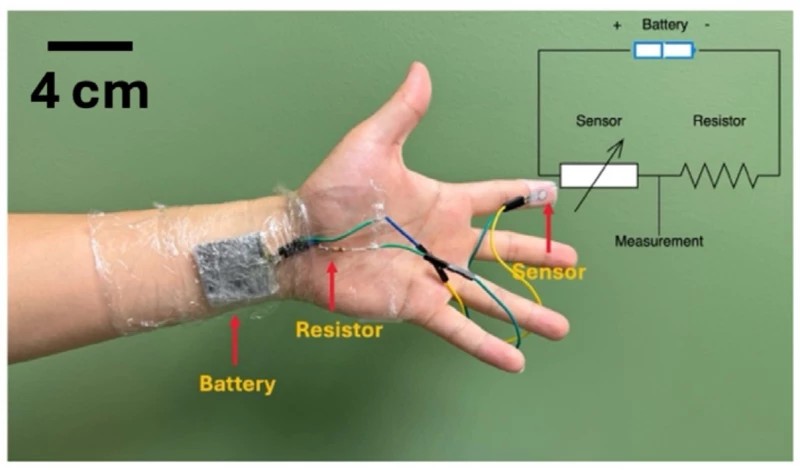
Figure 1. Stretchable Lemon-Inspired Battery Delivers Higher Voltage and Longer Life.
Following the guidance of her research supervisor, Sharmistha Bhadra—who noted that lemons contain enough ions to conduct electricity—Liu experimented with adding citric acid. The team discovered that mixing citric acid or even lactic acid into the gelatin electrolyte helped break down the blocking layer on the magnesium electrode, resulting in higher voltage and a longer-lasting battery. Figure 1 shows Stretchable Lemon-Inspired Battery Delivers Higher Voltage and Longer Life.
That’s impressive on its own—but the innovation doesn’t stop there. Once the researchers incorporated both acids into the gelatin electrolyte, they cut the battery using a design inspired by kirigami, the Japanese art of folding and cutting paper into three-dimensional shapes. This approach allowed the battery to stretch up to 80% beyond its original length while keeping its voltage stable.
To demonstrate its potential, the team created a simple wearable pressure sensor for a finger and powered it using the battery. Measuring just 0.4 × 0.4 inches (1 × 1 cm), the battery was able to run the device, delivering power only slightly below that of a standard AA battery.
The researchers also discovered that when the stretchy battery was drained and placed in a phosphate-buffered saline solution, the gelatin electrolyte and magnesium electrode fully degraded in just under two months. The molybdenum electrode degraded more slowly, requiring additional time to break down completely.
This work shows that it’s possible to create a more environmentally friendly battery, with potential applications in wearables, medical implants, and future Internet-of-Things devices, helping to reduce e-waste in the process.
Biodegradability and Future Applications
When immersed in a phosphate-buffered saline solution, the battery’s gelatin electrolyte and magnesium electrode fully degraded in under two months, while molybdenum took longer. This demonstrates a more environmentally friendly battery suitable for wearables, medical implants, and IoT devices, helping reduce e-waste.
Inspiration from a Childhood Science Project
Researchers at McGill University in Canada drew inspiration from the classic lemon-and-copper-wire experiment. They wondered if citric acid, a key component of lemons, could improve battery performance when added to a gelatin-based electrolyte.
Stretchable Design with Kirigami
To make the battery flexible, the researchers cut it in patterns inspired by kirigami, the Japanese art of folding and cutting paper. This allowed the battery to stretch up to 80% of its original length while maintaining stable voltage.
Source: NEW ATLAS
Cite this article:
Priyadharshini S(2025), Lemon-Inspired Stretchable Battery Boosts Voltage and Extends Lifespan, AnaTechMaz, pp.431
Recent Post
-

New Magnetic “Cloaking Device” Creates Invisible Shield to Protect Technology
Researchers at the University of Leicester have brought the idea of an...
-

World’s Fastest Camera Tracks Electrons in Real Time Using a 19.2-Attosecond X-Ray Pulse
A 19.2-attosecond soft X-ray pulse has given scientists the ability to watch...
-

World’s First ‘VPN Blanket’ Lets Users Stream Shows from Anywhere in Comfort
Designed for expats and international students, the world’s first...
-

MIT Unveils Ultrasonic System That Condenses Potable Water from Ambient Air
Researchers have developed an ultrasonic device capable of...
-

Engine Harnesses the Cold of Space to Produce Nighttime Power
A Stirling engine works by having one side exposed to a heat source while the other side is kept cooler...
-

Hypersonic Leap Brings One-Hour Worldwide Travel Within Reach
Covering half the planet in just one hour may seem unrealistic, yet progress is steadily pushing this ambition closer...
-

Breakthrough Retinal Chip Restores Reading Ability for Patients with Severe Vision Lossn
As age-related macular degeneration (AMD) progresses, the central part of...
-

Speech-Restoration Brain Chip Wins FDA Approval for First Human Testing
US brain–computer interface startup Paradromics is rapidly emerging as a...
-

Wearable Fingertip Tech Lets Users ‘Feel’ Texture on Digital Surfaces
Engineers at Northwestern University have created a flexible, Band-Aid-like fingertip device that lets users...
-
Stick-on Tech Turns Your Cup into a Health Monitoring Device
Terrified of needles, blood tests, and clinic bills? Science is getting closer to tracking your health in fast, affordable...
-
Lemon-Inspired Stretchable Battery Boosts Voltage and Extends Lifespan
The battery uses gelatin as the electrolyte and magnesium and...
-

Advanced Suspension System Boosts Carving Performance on Snowboards
Snowboards don’t simply glide over soft powder—they rattle and chatter over...
-

AI Tech Turns Sweat into a Tool for Early Disease Detection
Integrated with artificial intelligence, these sensors can detect specific metabolites and interpret complex...
-

Real-Time Seafood Safety Check Using Microneedle Sensor
When it comes to checking fish freshness before eating, you want results immediately. A new...
-

Researchers Train the Brain to Perceive Light in an Entirely New Way
Scientists tested a system that uses brief, patterned flashes of light to...