

Many-Mirrored Galaxies Deepen Dark Matter Mystery
Abell 3827, a galaxy cluster 1.3 billion light-years from Earth, is a stunning cosmic spectacle, with Hubble Space Telescope images revealing a bright quartet of merging galaxies surrounded by an ethereal, glowing "engagement ring." However, this cluster is not just a pretty sight; it holds a deep fascination for astrophysicists.
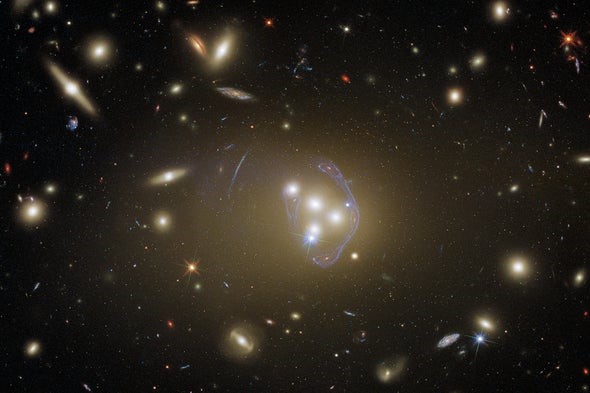
Figure 1. Many-Mirrored Galaxies Deepen Dark Matter Mystery
Figure 1 shows Despite its gleaming appearance, only about 10 percent of the cluster's mass is visible, while the remaining 90 percent is composed of dark matter, an invisible substance that acts like a gravitational lens, magnifying and warping the images of distant galaxies. Jenny Wagner, a theoretical astrophysicist, expressed her amazement at the cluster's uniqueness and the mystery it presents. Abell 3827 is a prime location for investigating the nature of dark matter, which makes up 80 percent of the universe's mass but has remained undetectable for nearly a century.
However, understanding Abell 3827 is no easy task. Various teams of physicists have reported different numbers of contorted images surrounding the cluster, ranging from four to eight, each suggesting varying distributions of dark matter. The apparent mirror images also exhibit unusual rotations, and research on the motions of the four central merging galaxies has led to conflicting conclusions about the presence of self-interacting dark matter (SIDM). This enigmatic galaxy cluster continues to challenge astronomers, with Richard Massey describing it as a "big car crash" where every observer offers a different version of events.
A new theory proposed by Jenny Wagner and her colleagues aims to resolve the discrepancies in the gravitationally lensed images in Abell 3827. Instead of attributing these peculiarities to dark matter, they suggest that the complex lensing morphology of the galaxy cluster itself is responsible. They propose that Abell 3827, rather than being a flat lens as traditionally assumed, is more three-dimensional, like a Belgian waffle, with correspondingly stronger aberrations on its projected images. Conventional models for dark matter lensing clusters typically assume a pancake-flat structure, which works well for explaining image shearing or stretching but falls short in explaining the unusual orientations seen in Abell 3827.
The new "waffle" hypothesis is based on the idea that the galaxies in the central quartet are not located at a single distance but are spread along the line of sight. This means that the light from the background galaxy is lensed not just once, as conventionally modelled, but multiple times along the estimated thickness of the Abell 3827 cluster, which is about 46 million light-years. The researchers suggest that one of the galaxies in the central quartet, which is closer to Earth than the others, may be partly responsible for this multiple lensing effect.
This complex lensing scenario in Abell 3827, a "chaos of galaxies running around in an unprecedented fashion," would benefit from future observations that measure the speeds of galaxies relative to each other. If the new theory holds, it could potentially explain previous indications of self-interacting dark matter (SIDM) in the cluster as artifacts of flawed dark matter models. Physicists may also need to revise their models to account for multiple gravitational lenses in other light-warping galaxy clusters. This approach acknowledges the importance of considering other structures along the line of sight in lensing analyses, though it is often neglected due to simplicity or data limitations.
Jenny Wagner and her team developed an image analysis tool to better map the distribution of mirror images in Abell 3827. They found discrepancies with previous human-made models and identified "ghost clumps" – areas of mass in the models that didn't align with observational data. The "waffle" hypothesis, which introduces a second gravitational lens to better represent the thickness of the galaxy cluster, may resolve these issues, but it requires a new approach to lens modelling for confirmation. Not all experts are convinced of this new theory. Liliya Williams of the University of Minnesota suggests that the image analysis tool may not be applicable to Abell 3827's unique lensed images due to their larger angular size.
However, some experts find the "waffle" hypothesis plausible and a simpler way of modelling the cluster without introducing unnecessary complications. Another interpretation of Abell 3827's peculiarities is self-interacting dark matter (SIDM), which may be interacting below current detection limits. More data and images of the cluster can help map its mass distribution and determine if stars are offset from dark matter, a potential signature of SIDM. Richard Massey, who connected Abell 3827 to SIDM models, believes that dark matter must have some level of self-interaction to exist and hopes to detect such subtle behaviour within the next decade.
Source:SCIENTIFIC AMERICAN
Cite this article:
Janani R (2023),Many-Mirrored Galaxies Deepen Dark Matter Mystery,Anatechmaz,pp.808