

Introducing an Exceptional Flexible Adhesive for Electronic Devices with Outstanding Recovery and Adhesion Properties
The rapid progress in flexible electronic technology has given rise to innovative devices like foldable displays, wearables, e-skin, and medical devices. However, these advancements have increased the demand for flexible adhesives that can quickly regain their shape while effectively connecting various components in these devices. Traditional pressure-sensitive adhesives (PSAs) often struggle to strike a balance between recovery capabilities and adhesive strength. In a remarkable study conducted at UNIST (Ulsan National Institute of Science and Technology), researchers have successfully developed new types of urethane-based crosslinkers to address this crucial challenge. [2]
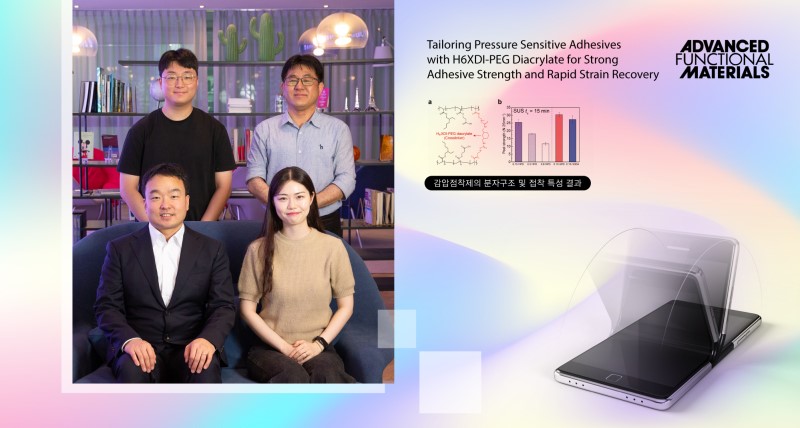
Figure 1. Flexible Adhesive and The Research Team. (Credit: UNIST)
Figure 1 shows the flexible adhesive and the research team. Under the leadership of Professor Dong Woog Lee from UNIST's School of Energy and Chemical Engineering, the research team created novel crosslinkers using substances like m-xylylene diisocyanate (XDI) or 1,3-bis(isocyanatomethyl)cyclohexane (H6XDI) as hard segments, combined with poly(ethylene glycol) (PEG) groups as soft segments. By incorporating these newly synthesized materials into pressure-sensitive adhesives, they achieved significantly enhanced recoverability compared to conventional methods.
The PSA formulated with H6XDI-PEG diacrylate (HPD) demonstrated exceptional recovery properties while maintaining high adhesion strength (~25.5 N per 25 mm width). Through rigorous testing involving 100,000 folds and 10,000 cycles of multi-directional stretching, the PSA crosslinked with HPD displayed remarkable stability under repeated deformation. This showcases its potential for applications that demand both flexibility and recoverability.
Even after subjecting the adhesive to strains of up to 20%, it maintained high optical transmittance (>90%). This makes it suitable for fields like foldable displays, where flexibility and optical clarity are essential.
“This breakthrough in adhesive technology offers promising possibilities for electronic products that require both high flexibility and rapid recovery characteristics,” said Professor Lee. “Our research addresses the long-standing challenge of balancing adhesion strength and resilience, opening up new avenues for the development of flexible electronic devices.” [1]
Hyunok Park, a researcher involved in the study, emphasized the significance of this research, stating, "The introduction of this new crosslinking structure has led to an adhesive with exceptional adhesion and recovery properties. We believe it will drive future advancements in adhesive research while contributing to further developments in flexible electronics." [1]
The study's findings were published ahead of their official publication in the online version of Advanced Functional Materials on July 12, 2023. This work received support from the 2023 Research Fund at UNIST, as well as additional support from organizations including the National Research Foundation (NRF) of Korea, Defense Acquisition Program Administration, and Ministry of Trade.
Source: Ulsan National Institute of Science and Technology(UNIST)
References:
- Ulsan National Institute of Science and Technology(UNIST). (2023, September 19). Researchers unveil new flexible adhesive with exceptional recovery and adhesion properties for electronic devices. ScienceDaily. Retrieved September 19, 2023 from www.sciencedaily.com/releases/2023/09/230919154854.htm
- Hyunok Park, Daegyun Lim, Geonwoo Lee, Myung‐Jin Baek, Dong Woog Lee. Tailoring Pressure Sensitive Adhesives with H6XDI‐PEG Diacrylate for Strong Adhesive Strength and Rapid Strain Recovery. Advanced Functional Materials, 2023; DOI: 10.1002/adfm.202305750
Cite this article:
Hana M (2023), Introducing an Exceptional Flexible Adhesive for Electronic Devices with Outstanding Recovery and Adhesion Properties, AnaTechmaz, pp. 705