Central Processing Unit (CPU)
Discuss the role of the CPU in computing power. Explore topics such as clock speed, instruction set architecture, multi-core processors, and the relationship between CPU performance and overall system performance.
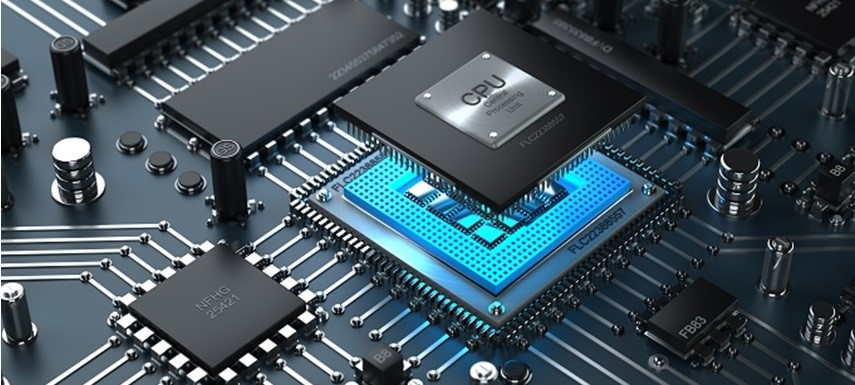
Figure 1. Central Processing Unit (CPU)
Figure 1 shows A Central Processing Unit (CPU) is the primary component of a computer system that performs most of the processing inside the computer. It is often referred to as the "brain" of the computer. The CPU executes instructions and carries out calculations, logic operations, and data processing. It fetches instructions from the computer's memory, decodes them, and executes them by performing the necessary arithmetic, logical, and control operations. The CPU is responsible for coordinating and controlling the activities of other hardware components in the computer system.
Key features and components of a CPU include:
Control Unit (CU): The control unit manages the execution of instructions by controlling the flow of data between the CPU, memory, and other devices. It interprets and decodes instructions, determines the necessary operations, and directs the execution of these operations.
Arithmetic Logic Unit (ALU): The ALU performs arithmetic operations (such as addition, subtraction, multiplication, and division) and logical operations (such as comparisons and Boolean operations) on data. It carries out the actual calculations and manipulations of numerical and logical data.
Registers:Registers are small, high-speed storage units within the CPU that hold data and instructions that the CPU is currently processing. They provide fast access to frequently used data and help improve the overall performance of the CPU.
Cache Memory: The cache memory is a small, high-speed memory located inside or close to the CPU. It stores frequently accessed data and instructions to speed up their retrieval and execution, reducing the need to fetch data from slower main memory.
Clock: The CPU relies on a clock signal to synchronize its operations. The clock provides a regular pulse that regulates the timing of instructions and operations within the CPU.
CPU performance is influenced by factors such as clock speed (measured in gigahertz), the number of cores (multiple processing units within a single CPU), cache size, architecture, and microarchitecture. CPUs are designed based on different instruction set architectures (ISAs) such as x86, ARM, or RISC-V, and they are a critical determinant of a computer system's overall performance and capabilities.In modern computers, the CPU is typically integrated onto a single chip called a microprocessor. It interacts with other hardware components such as memory, storage, and input/output devices to execute programs and perform tasks requested by the user.
Source:tutorialspoint
Cite this article:
Janani R (2023),Computing Power, Anatechmaz,pp 2