

New Self-Degrading Plastic Could Help Tackle Global Waste
Plastic waste has become one of the world's most persistent environmental challenges, with many disposable products remaining in landfills and ecosystems for decades. Now, scientists have developed an innovative "living plastic" that can break itself down on demand, offering a promising new approach to reducing long-term plastic pollution.
In a recent breakthrough, researchers created a biodegradable plastic embedded with specially engineered microbes capable of destroying the material from within. When activated, the plastic completely decomposes in just six days, leaving behind no harmful microplastics.
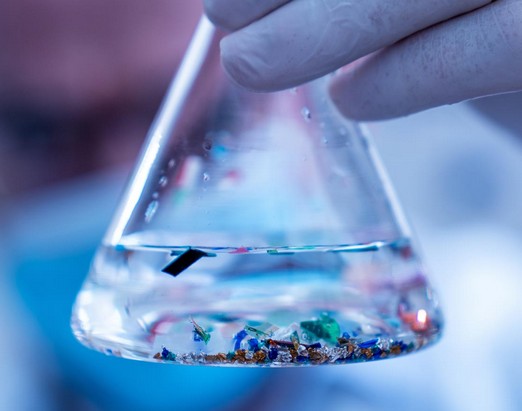
Figure 1. New Self-Degrading Plastic.
A Smarter Way to Break Down Plastic
Previous attempts at creating self-degrading plastics often relied on a single enzyme, limiting efficiency. In this new approach, researchers engineered bacteria to produce two complementary enzymes that work together to accelerate decomposition. The first enzyme breaks long polymer chains into smaller fragments, while the second further reduces those fragments into their basic molecular building blocks. This coordinated process allows the material to degrade rapidly and completely.
The team incorporated the bacterial spores into polycaprolactone, a biodegradable polymer commonly used in 3D printing and certain medical applications. Importantly, the resulting material maintained mechanical properties similar to conventional plastic products. Figure 1 shows new self-degrading plastic.
Complete Degradation Without Microplastics
When exposed to a warm nutrient-rich environment, the dormant spores became active and began producing the degradation enzymes. Within six days, the plastic was completely broken down into its original building blocks.
One of the most significant achievements was the elimination of microplastic formation. Unlike conventional plastics that often fragment into tiny particles during degradation, the new material decomposed cleanly, avoiding one of the major environmental concerns associated with plastic waste.
From Wearable Devices to Sustainable Products
To demonstrate the technology's practical potential, researchers created a wearable electronic electrode using the living plastic. The device performed normally during use and then fully degraded within two weeks after activation. The successful demonstration suggests that future applications could extend to packaging, medical devices, disposable electronics, and other short-lifecycle products where environmental impact is a growing concern.
A Step Toward Cleaner Oceans and Landfills
Looking ahead, scientists aim to develop activation methods that work directly in aquatic environments, where large amounts of plastic pollution eventually accumulate. They also hope to adapt the technology to other commonly used plastics.
While additional research is needed before large-scale commercialization becomes possible, the breakthrough represents an exciting step toward materials that are designed not only for performance but also for responsible end-of-life disposal. If successfully expanded, living plastics could help redefine how society uses and disposes of plastic—transforming waste from a long-term burden into a controllable and environmentally friendly process.
References:
- https://scitechdaily.com/scientists-create-living-plastic-that-self-destructs-in-just-six-days/
Cite this article:
Keerthana S (2026), New Self-Degrading Plastic Could Help Tackle Global Waste, AnaTechMaz, pp.1260