

Human Blood Cell Development Echoes 700 million Years of Evolution
The blood flowing through our bodies may be far older than anyone imagined. Researchers at Kyoto University have reconstructed a 700-million-year evolutionary history of blood cells, revealing that the way modern blood cells develop today mirrors the same path they followed through evolution.
By analyzing genetic activity across a wide range of animals and even single-celled organisms, the team discovered that modern blood cell differentiation reflects an ancient biological blueprint inherited from Earth’s earliest life forms. Their findings suggest that every time the human body creates new blood cells, it is essentially replaying a process shaped over hundreds of millions of years.
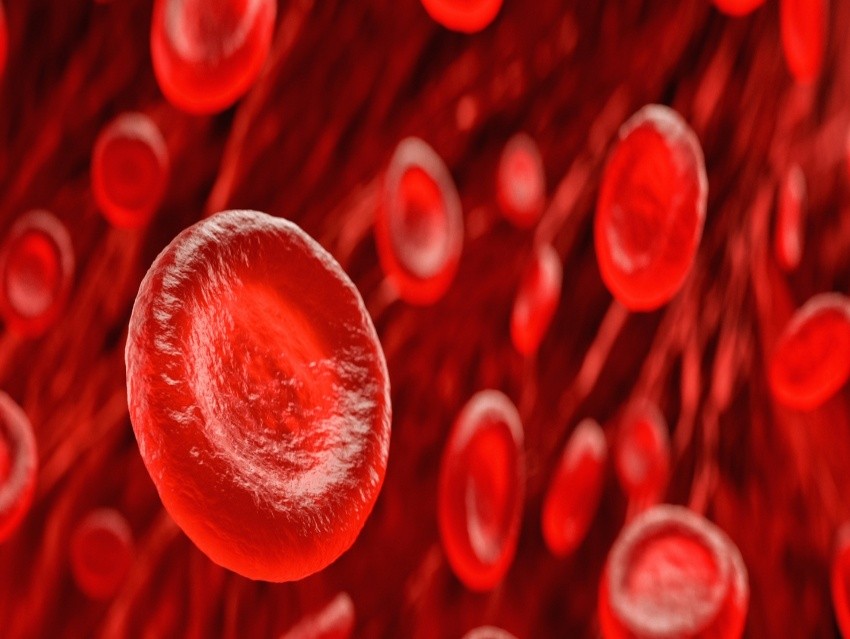
Figure 1. Human Blood Cell.
To uncover these origins, scientists developed a new analytical approach capable of comparing gene expression patterns across diverse species. Their goal was to determine when blood cells first emerged and how they gradually evolved into the specialized immune and oxygen-carrying cells found in humans today. Figure 1. Human Blood Cell.
One of the study’s most striking discoveries involved a gene known as FOS, which remains active in modern blood cells. Researchers traced this gene back to a single-celled ancestor that lived nearly 700 million years ago — around the same period when multicellular animals first began to appear.
The findings suggest that early life forms did not create blood cells from entirely new genetic material. Instead, ancient organisms repurposed existing genes to develop the first immune-like cells.
Among modern blood cells, macrophages showed the strongest resemblance to those primitive ancestors. These cells, known for engulfing harmful pathogens and cellular debris, may closely resemble the earliest blood cells that once acted as roaming defenders in primitive organisms.
As evolution progressed, blood cells diversified into increasingly specialized forms [1]. Researchers observed that mast cells likely branched from early macrophage-like cells, eventually giving rise to red blood cells and primitive T cells. Meanwhile, early B-cell ancestors appear to have evolved along a separate pathway.
The study not only sheds light on the deep evolutionary origins of human blood but could also open new doors in medicine. Scientists believe the same evolutionary mapping technique may help trace how complex diseases such as cancer develop at the cellular level.
By viewing disease through an evolutionary lens, researchers hope to uncover hidden biological mechanisms and develop more advanced therapies and treatment strategies in the future.
References:
- https://interestingengineering.com/science/study-finds-human-blood-cell-development-mirrors-700-million-years-of-evolution
Cite this article:
Keerthana S (2026), Human Blood Cell Development Echoes 700 million Years of Evolution, AnaTechMaz, pp.1258