

A Greener Solution: Plant-Based Microplastic Removal
A humble plant seed may hold the key to tackling one of today’s most stubborn environmental challenges—microplastics in water. Researchers in Brazil have discovered that seeds from Moringa oleifera, a plant widely grown in tropical regions, can effectively remove tiny plastic particles from water, offering a natural alternative to conventional chemical treatments.
The study, conducted at São Paulo State University’s Institute of Science and Technology, highlights the growing potential of plant-based solutions in water purification. Known for its nutritional value, moringa has long been consumed as food, but scientists are increasingly exploring its seeds for their remarkable cleansing properties.
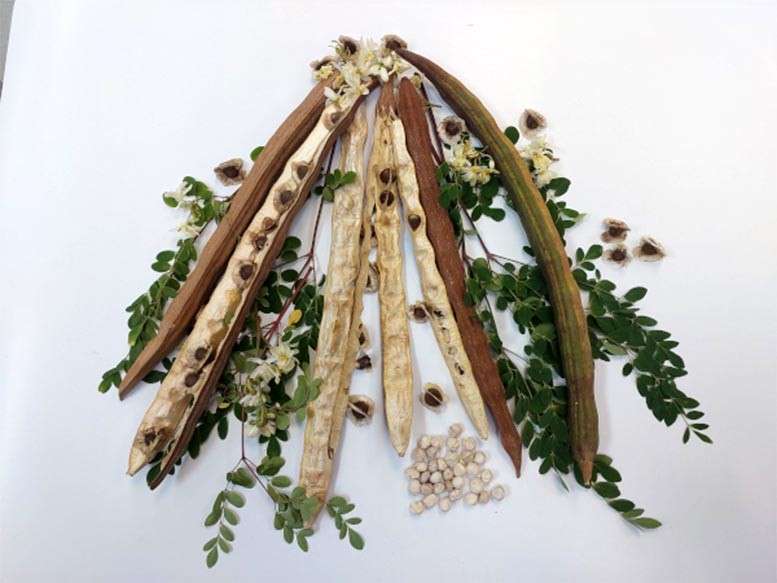
Figure 1. Moringa seed.
A Natural Alternative to Chemicals
In water treatment plants, chemicals like aluminum sulfate are commonly used to remove contaminants through a process called coagulation. This method helps bind tiny particles together so they can be filtered out. However, such chemicals can leave behind residues and may raise environmental and health concerns. Figure 1. Moringa seed.
The new research shows that a simple saline extract made from moringa seeds can perform just as well as these traditional chemicals—and in some cases, even better, particularly in alkaline water conditions. While the extract can increase organic matter in the water, making large-scale treatment slightly more complex, it remains a highly promising option for smaller or rural applications where affordability and accessibility are key.
How it Works
Microplastics and many other pollutants carry a negative electrical charge, causing them to repel one another and remain suspended in water. This makes them difficult to remove through basic filtration.
Moringa seed extract acts as a natural coagulant. It neutralizes the charge of these particles, allowing them to clump together into larger clusters. Once grouped, these particles can be easily captured using simple sand filtration systems.
This process, known as in-line filtration, is particularly effective for relatively clear water that does not require heavy pre-treatment—making it ideal for decentralized or low-resource settings.
Putting it to the Test
To evaluate the method, researchers introduced microplastics made from polyvinyl chloride (PVC) into water samples. PVC was chosen due to its widespread use and known health risks. The particles were also artificially aged using ultraviolet light to better mimic real-world conditions [1].
The contaminated water was then treated using both moringa extract and traditional aluminum sulfate. The results were striking: both methods achieved similar levels of microplastic removal.
Advanced imaging techniques confirmed the findings, showing that moringa effectively helped form larger particle clusters, making filtration more efficient.
From the Lab to Real Water Sources
Encouraged by laboratory success, the research team has begun testing the method on water drawn from natural sources. Early results suggest that moringa remains effective outside controlled conditions, reinforcing its potential for real-world use.
A Sustainable Path Forward
As concerns grow over the environmental impact of chemical coagulants, the search for greener alternatives is accelerating. Moringa seeds offer several advantages—they are biodegradable, widely available, and easy to use.
While more research is needed to refine the process for large-scale systems, the findings point to a future where clean water solutions could be simpler, safer, and more sustainable.
References:
- https://scitechdaily.com/forget-chemicals-this-plant-removes-microplastics-from-water/
Cite this article:
Keerthana S (2026), A Greener Solution: Plant-Based Microplastic Removal, AnaTechMaz, pp.1254