

2,000-Year-Old Enigma Cracked: Researchers May Have Deciphered Teotihuacan’s Lost Script
After analyzing symbols found in murals and artifacts from Teotihuacan, researchers concluded that these markings likely form a genuine writing system. They propose it represents an early Uto-Aztecan languages tongue, which later evolved into Cora language, Huichol language, and Nahuatl—the language closely associated with the Aztecs.
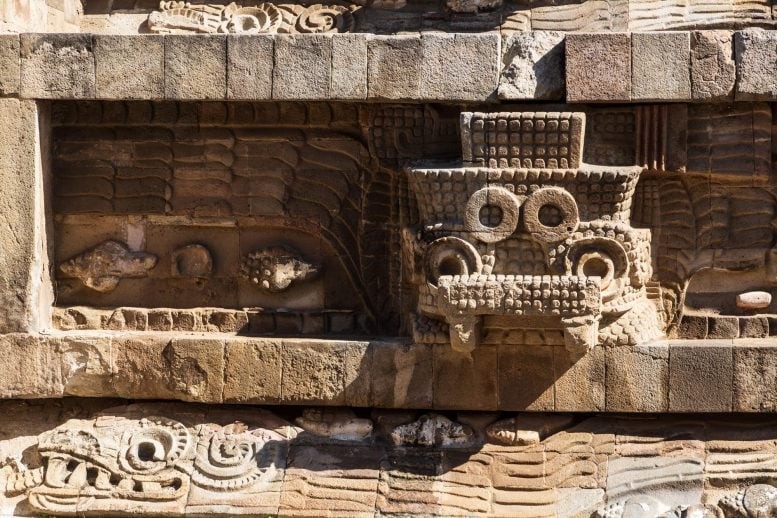
Figure 1. Ancient Code Unlocked: Researchers May Have Deciphered Teotihuacan’s 2,000-Year-Old Script.
Founded around 100 BC, Teotihuacan remained a major cultural powerhouse until about 600 AD. Researchers compare its significance to that of Rome in the Roman Empire, underscoring its central role in ancient Mesoamerica. Figure 1 shows Ancient Code Unlocked: Researchers May Have Deciphered Teotihuacan’s 2,000-Year-Old Script.
Unknown People and Cultural Identity
“There are many different cultures in Mexico, some of which can be tied to specific archaeological traditions, while others remain uncertain. Teotihuacan is one such case—we still don’t know what language its people spoke or which later cultures they were connected to,” says Magnus Pharao Hansen.
According to Christophe Helmke, experts can clearly distinguish Teotihuacan from other cultures of the same era. For example, evidence shows that parts of the city were inhabited by the Maya civilization, a society that is far better understood today.
The people of Teotihuacan left behind a rich collection of symbols, especially in murals and decorated pottery. For decades, scholars have debated whether these markings constitute a true writing system.
Linguistic Breakthrough and Nahuatl Connection
Hansen and Helmke now argue that these inscriptions do represent a language—one that predates and is closely related to Cora language, Huichol language, and Nahuatl.
The Aztecs are another prominent culture from Mexico. Traditionally, scholars believed they arrived in central Mexico after Teotihuacan’s decline. However, the researchers point to linguistic evidence suggesting that Nahuatl-speaking groups may have been present much earlier—possibly as direct descendants of Teotihuacan’s inhabitants.
Deciphering Challenges and Methods
“Trying to decode this script using a much later language would be like interpreting the runes on Denmark’s Jelling Stone with modern Danish—it simply wouldn’t work. The key is to use a language closer to the original time period,” explains Christophe Helmke.
Deciphering the script is highly complex. Some symbols act as logograms, directly representing objects or ideas—for example, a coyote symbol meaning “coyote.” Others function like a rebus, where the sounds of depicted objects combine to express more abstract meanings.
This method demands deep expertise in both the writing system and the reconstructed Uto-Aztecan languages. Accurately interpreting the texts depends on understanding how words were pronounced at the time.
Ongoing Research and Future Discoveries
Researchers are applying multiple approaches simultaneously, reconstructing the ancient language while using it to decode the inscriptions from Teotihuacan.
“In Teotihuacan, pottery with inscriptions is still being found, and more murals are likely to emerge. One major limitation is the small number of available texts. Discovering the same symbols used consistently across different contexts would greatly strengthen our hypothesis—but for now, we must work with what we have,” says Magnus Pharao Hansen.
Implications for Mesoamerican History
“No one before us has applied a language that truly fits the historical period to decipher this script. Nor has anyone demonstrated that certain logograms carried phonetic values that could be used beyond their primary meanings. With this, we’ve established a method that others can build on to deepen the interpretation of these texts,” says Magnus Pharao Hansen.
Their findings have sparked global academic interest, and the team aims to organize workshops to refine and test their methodology further.
“If our conclusions are correct, it’s not just about deciphering a writing system—it could reshape our entire understanding of Mesoamerica and help solve the long-standing mystery surrounding the people of Teotihuacan,” adds Christophe Helmke.
Source: SciTECHDaily
Cite this article:
Priyadharshini S (2026), 2,000-Year-Old Enigma Cracked: Researchers May Have Deciphered Teotihuacan’s Lost Script, AnaTechMaz, pp.1246