

Researchers Have Tracked the Evolutionary History of Every Known Bird Species
Collaboration Fueled by Shared Passion
McTavish mentioned that although she had never met Miller before he invited her to collaborate, the project aligned seamlessly with her ongoing work.
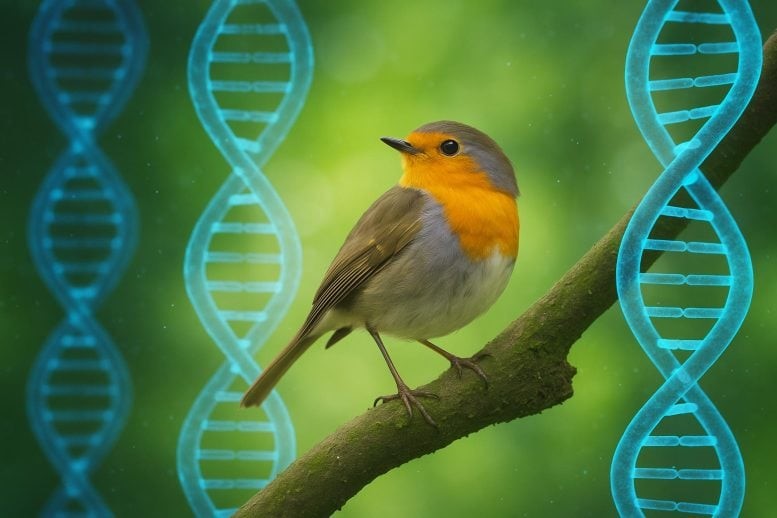
Figure 1. Mapping the Evolutionary History of All Known Bird Species.
“Eliot is really passionate about birds, and his lab is full of bird experts. They also develop birding apps like Merlin and eBird, which was their contribution. On my side, I’ve been developing software to integrate evolutionary trees,” she explained. Figure 1 shows Mapping the Evolutionary History of All Known Bird Species.
OpenTree is a collaborative initiative that unites evolutionary biologists and taxonomy experts to create an accurate and comprehensive evolutionary tree, mapping how every named species on Earth is interconnected. Operating on a wiki-like model, it allows users to upload data manually and update the evolutionary relationships within the tree.
McTavish emphasized that as new insights into species relationships emerge, users can contribute that information to the Tree of Life, ensuring it remains up-to-date with the latest understanding of evolutionary connections.
Ongoing Updates in the Expanding Tree of Life
With over 2.5 million species now included in the Open Tree of Life — and new data continually streaming in due to advancements in genome sequencing — McTavish, a biologist in the Department of Life and Environmental Sciences at the School of Natural Sciences, and her collaborators have been developing software that automatically updates the tree as new data becomes available.
Like the new study, the Open Tree project is supported by funding from the National Science Foundation, which McTavish highlighted as essential for fostering collaborations, collecting data from hundreds of published researchers, and facilitating the exchange of information across disciplines and institutions.
The Need for a Comprehensive Bird Evolution Map
The study begins with the recognition that understanding the full evolutionary history of birds is crucial. Birds are incredibly diverse, with over 10,000 species across the globe. To accurately trace their evolution, scientists need to map out the genetic relationships between them, understanding how different species evolved from common ancestors. This comprehensive mapping helps in uncovering patterns of adaptation, migration, and ecological changes over millions of years.
The Role of Genetic Sequencing in Evolutionary Studies
In this section, the focus shifts to the technology enabling this research: genetic sequencing. By decoding the DNA of various bird species, scientists can identify similarities and differences in their genetic makeup. Advances in genome sequencing have made it possible to gather vast amounts of data on species relationships, filling in gaps where traditional fossil records or morphological studies might not provide answers. This cutting-edge technology has revolutionized the study of evolutionary biology, enabling more accurate and detailed trees of life.
Building the Evolutionary Tree
With genetic data in hand, the next step is constructing the evolutionary tree. This tree is a diagram that illustrates how different bird species are related based on their genetic similarities and evolutionary history. The tree is complex, with some species branching off from others long ago, while others evolved much more recently. Researchers have used this data to create a "family tree" of birds, tracing how they diverged from a common ancestor over millions of years.
The Collaboration and Open-Source Model
The research is not done in isolation; it’s a collaborative effort among biologists, ornithologists, and taxonomists. Through platforms like the Open Tree of Life project, scientists around the world can contribute to and update the evolutionary tree. This open-source approach allows for continuous updates as new data emerges from ongoing genetic research, fossil discoveries, or new studies on bird behavior and ecology. The collaborative environment fosters interdisciplinary communication, enhancing the overall understanding of bird evolution.
Impact and Future Research
The final part of the series explores the impact of this research. Having a detailed evolutionary map of all known bird species is valuable not just for understanding biodiversity, but for conservation efforts. It helps scientists identify which species may be at risk, understand ecological shifts, and predict how birds might adapt to future environmental changes. Ongoing research will continue to refine the evolutionary tree as more species are studied and new data becomes available, offering insights into the evolution of birds and their role in ecosystems.
Source: SciTECHDaily
Cite this article:
Priyadharshini S (2025), Researchers Have Tracked the Evolutionary History of Every Known Bird Species, AnaTechMaz, pp.1134