

What Gibberish Reveals About ChatGPT’s Grasp of Language
By now, most of us have tried to stump a chatbot — asking if it has feelings, testing it with paradoxical riddles, or tossing it sheer absurdity just to see how it responds.
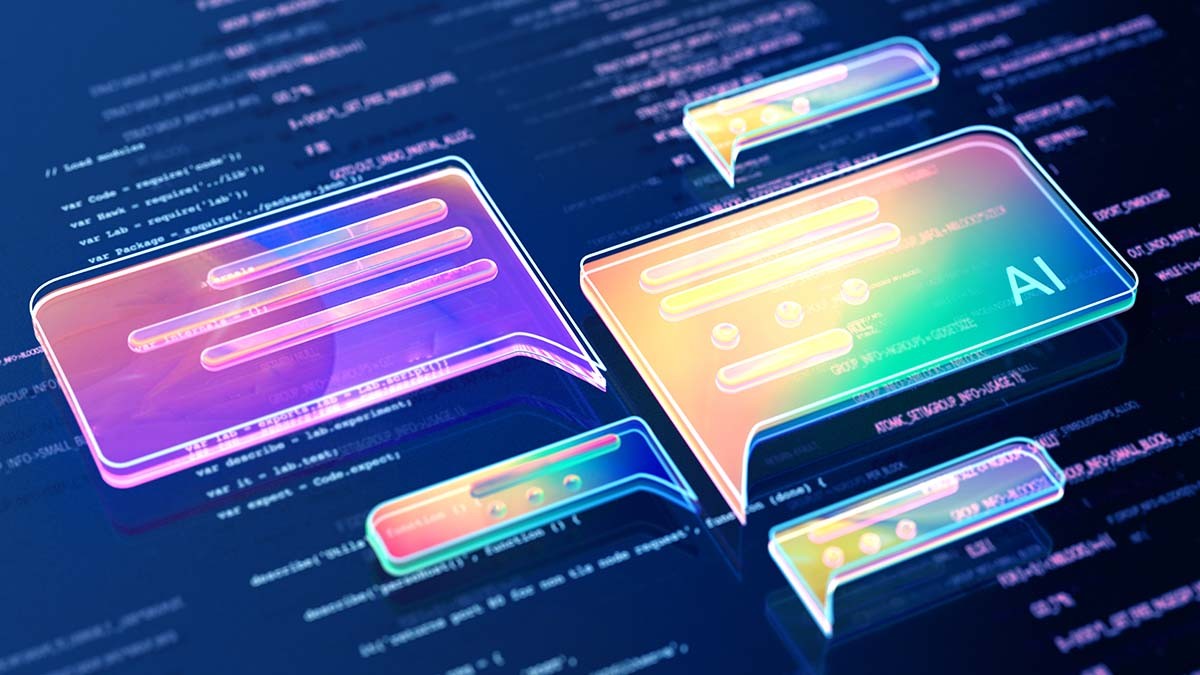
Figure 1. How Nonsense Tests Expose ChatGPT’s Understanding of Language.
That’s exactly what psycholinguist Michael Vitevitch set out to discover. A professor in the Speech-Language-Hearing Department at the University of Kansas, Vitevitch recently conducted a study where he fed ChatGPT a series of “nonwords” — invented combinations of letters and sounds commonly used in cognitive psychology to probe how people process language. Figure 1 shows How Nonsense Tests Expose ChatGPT’s Understanding of Language.
“As a psycholinguist, I’ve often given people carefully crafted nonsense to better understand what they know,” Vitevitch explains. “Now, I wanted to apply the same methods to AI to see how it processes that same kind of input.”
When speaking gibberish to ChatGPT, Vitevitch observed that while the AI was excellent at detecting patterns, it didn’t always follow the same logic as a human would.
“It identifies patterns — just not always the ones a person would pick up on,” he notes. “Humans and AI process things differently, and that’s okay. The key is knowing where those differences lie so we can build AI systems that complement human thinking — especially in areas where we need extra support.”
Vitevitch also tested ChatGPT on “extinct words” — old English terms that have fallen out of everyday use. Among them was upknocking, a 19th-century job involving tapping on windows to wake people before alarm clocks existed.
Out of 52 archaic terms, ChatGPT accurately defined 36. For 11, it admitted uncertainty. In three cases, it borrowed meanings from other languages. And in two instances, it simply made things up.
“It did hallucinate on a couple of things,” Vitevitch says. “We asked it to define these extinct words. It got a good number of them right. For others, it responded, ‘I don’t know this one — it’s an unusual or very rare word.’ But in a few cases, it invented meanings. I suppose it was just trying to be helpful.”
Next, Vitevitch turned to a phonological test. He presented ChatGPT with a list of Spanish words and asked it to produce similar-sounding English words — a common method used to investigate how humans mentally organize and retrieve speech sounds.
“If I give you a Spanish word and ask for an English word that sounds like it, you — as an English speaker — would likely respond with something from English that phonetically resembles it,” Vitevitch explains. “You wouldn’t suddenly switch languages and give me a word from an entirely different language — but that’s exactly what ChatGPT did.”
“[The AI] used to create ‘sniglets’ — made-up words for things that don’t have names,” says Vitevitch. “Like when you’re vacuuming and there’s a thread on the floor that just won’t get sucked up, no matter how many times you go over it. What do you call that thread? The AI coined the term ‘carperpetuation.’”
Vitevitch found that ChatGPT did “kind of an interesting job” in this area. When asked to invent new words for specific concepts, it often defaulted to a formulaic approach — typically blending two familiar words.
By feeding ChatGPT nonsense prompts, Vitevitch hopes to uncover the unusual, sometimes surprising ways AI processes language. The goal, he emphasizes, isn’t to make AI think like humans — but to explore how its unique strengths can complement our own.
Source: COSMOS
Cite this article:
Priyadharshini S (2025), What Gibberish Reveals About ChatGPT’s Grasp of Language, AnaTechMaz, pp.269
Recent Post
-

OpenAI May Soon Allow You To ‘Sign in with ChatGPT’ on Third-Party Apps
OpenAI is considering introducing a "Sign in with ChatGPT".....
-

Microsoft Begins Testing Copilot for Gaming in The Xbox App on iOS and Android
Microsoft announced on Wednesday the beta rollout of its Copilot......
-
Nvidia Anticipates Billions in Revenue Loss Due to H20 Chip Licensing Mandates
As Nvidia announced its earnings for the first quarter of fiscal......
-
Apple Reportedly Set to Launch AI-Powered Battery-Saving Feature in Ios 19 For Iphones
Speculation is heating up around the upcoming iOS 19 update.....
-
Android 16 Rolls Out Enhanced Security and Intelligent Anti-Theft Features
Android 16, the upcoming major update for Android devices, is......
-

Children’s Websites Riddled with Tracking and Inappropriate Ads, Study Finds
At first glance, websites designed for children appear safe and......
-

Google Maps User Spots Mysterious Satellite Zooming Over Texas, possibly a Starlink Satellite
In an unexpected twist of digital sleuthing, a Reddit user recently......
Trump Mobile Unveils $499 Android Smartphone with an Unlimited Service Plan Priced At $47.45 Per Month
The Trump Organization has...
How Your Android Phone Is Capable of Detecting Earthquakes
Your Android phone has a hidden life-saving feature you may not know about: it can detect earthquakes and send ...
ElevenLabs Launches Mobile Text-to-Speech App—No Browser Required
ElevenLabs has introduced a new mobile app that allows users to...
-

Research Links Addictive Tech Habits in Teens to Greater Mental Health Risks
Adolescents who become deeply attached to mobile phones,...
-

Researchers Crack Security of eSIM Chips Found in Billions of Devices
A newly discovered vulnerability in widely used eSIM chips could...
-

Rugged Adventure Phone Delivers Sharper Visuals with Built-In Projector
Portable projectors can deliver movies to the campsite or support......
-
What Gibberish Reveals About ChatGPT’s Grasp of Language
By now, most of us have tried to stump a chatbot — asking if it has feelings, testing......
-
How to Disable AI Features in Windows for a More Peaceful Experience
Microsoft—like most major tech companies—is packing artificial......