

A New Reign in Propylene Production: Cobalt Catalyst Surpasses Precious Metals
Synthesis of High-Performance CoS-1 Catalyst
Chinese Academy of Sciences, in collaboration with other researchers, developed a high-performance cobaltosilicate zeolite catalyst named CoS-1 through a hydrothermal synthesis method. This catalyst features exclusively tetrahedrally coordinated cobalt sites, with no detectable unstable cobalt species. CoS-1 demonstrated a propylene productivity of 9.7 kgC₃ per kg of catalyst per hour, significantly surpassing the performance of the conventional PtSn/Al₂O₃ catalyst.
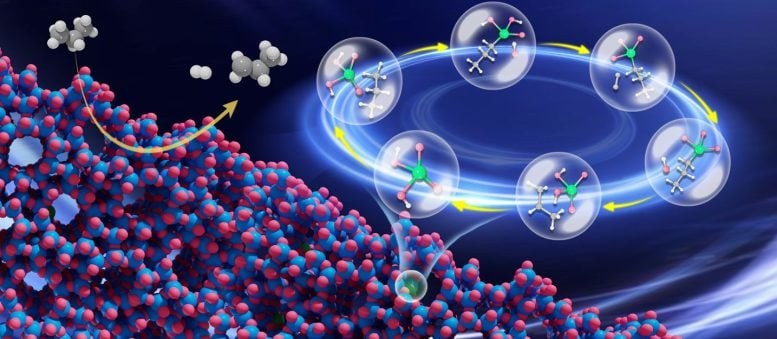
Figure 1. Cobalt Takes the Crown: A New Era in Propylene Catalysis.
The synthesis procedure involved preparing a precursor gel comprising cobalt salts, tetraethyl orthosilicate (TEOS), tetrapropylammonium hydroxide (TPAOH), urea, and water. The mixture underwent crystallization at 180 °C, followed by calcination to remove organic templates. Subsequently, three sequential nitric acid washing steps at 80 °C were conducted to eliminate excess cobalt species. The final product, CoS-1, retained only stable tetrahedral cobalt sites, contributing to its remarkable catalytic stability and performance. Figure 1 shows Cobalt Takes the Crown: A New Era in Propylene Catalysis.
Atomic-Level Insights into Catalyst Performance
Using density functional theory (DFT) calculations and ab initio molecular dynamics simulations, the researchers investigated the stability of various active centers and elucidated the mechanism underlying the exceptional performance of the CoS-1 catalyst. Their analysis revealed that the flexible zeolite framework significantly lowers the dehydrogenation energy barriers at isolated cobalt sites through entropic effects. As a result, the energy barrier for propane dehydrogenation on CoS-1 is lower than that observed for the conventional Pt₃Sn alloy catalyst.
Microkinetic simulations further indicated that although CoS-1 exhibits a lower intrinsic dehydrogenation barrier, its overall reaction rate at low conversion levels is slightly reduced compared to Pt₃Sn. This is attributed to entropy loss associated with propane diffusion into the zeolite pores, which leads to a lower effective propane concentration at the isolated cobalt sites.
Importantly, CoS-1 demonstrated excellent long-term stability. This durability is attributed to the non-bonding adsorption of propylene within the zeolite channels, which facilitates rapid product desorption and minimizes coke formation—key factors contributing to sustained catalytic performance.
The Propylene Challenge – Why Catalyst Innovation Matters
Propylene is a vital building block in the petrochemical industry, used to produce plastics, synthetic rubbers, and chemicals. Traditionally, catalysts based on precious metals like platinum-tin (PtSn) are used in propane dehydrogenation (PDH), a key method for propylene production. However, these catalysts suffer from issues like high cost, deactivation due to coking, and limited selectivity. The need for a cheaper, more stable, and efficient alternative has driven researchers to explore non-precious metal systems.
Meet CoS-1 – A Game-Changing Cobalt Catalyst
Developed by Prof. Jianping Xiao’s team at the Dalian Institute of Chemical Physics, the CoS-1 catalyst is a cobalt-based cobaltosilicate zeolite created via hydrothermal synthesis. Remarkably, it contains only tetrahedrally coordinated cobalt sites, completely free from unstable cobalt species. CoS-1 achieved a propylene productivity of 9.7 kgC₃/kg₍catalyst₎/h, significantly outperforming the industrial PtSn/Al₂O₃ catalyst.
Synthesis Highlights:
- Precursors: cobalt salts, tetraethyl orthosilicate (TEOS), TPAOH, urea, and water.
- Conditions: crystallized at 180 °C.
- Purification: calcination followed by triple nitric acid washing to retain only stable cobalt sites.
Cracking the Code – How CoS-1 Works at the Atomic Level
The success of CoS-1 lies in its atomic structure. Advanced simulations, including DFT and ab initio molecular dynamics, revealed that the flexible zeolite framework plays a crucial role. It lowers the propane dehydrogenation barrier at isolated cobalt sites due to entropic effects, making the reaction easier compared to Pt₃Sn alloy surfaces.
However, there's a trade-off: microkinetic simulations showed CoS-1 has a slightly lower reaction rate at initial conversions, caused by entropy loss when propane diffuses into the narrow zeolite channels—resulting in lower effective concentration near the active sites.
Longevity Unleashed – Stability Secrets of CoS-1
One of CoS-1’s standout features is its exceptional long-term stability. Unlike many metal catalysts that deactivate due to coke buildup, CoS-1 avoids this through a unique mechanism: non-bonding adsorption of propylene. This interaction allows:
- Fast product desorption
- Less residence time in the active zone
- Lower chances of carbon buildup (coke)
This mechanism is central to CoS-1’s sustained activity over extended operation periods.
The Future of Dehydrogenation – From Lab to Industry
CoS-1 marks a significant shift in catalyst design: moving from precious metals to more cost-effective, sustainable transition-metal-based systems without sacrificing performance. It not only addresses cost and supply concerns but also introduces new strategies in structural engineering, entropy management, and coke resistance.
implications:
- Lower catalyst costs for industry
- Better environmental footprint
- Potential expansion to other light alkane dehydrogenation reactions
Source:SciTECHDaily
Cite this article:
Priyadharshini S (2025), A New Reign in Propylene Production: Cobalt Catalyst Surpasses Precious Metals, AnaTechMaz, pp.224
Recent Post
-

Physicists Unveil the First Room-Temperature 2D Altermagnet
Despite extensive theoretical and experimental research into unconventional....
-
“Zangenite” – Scientists Uncover Newly Discovered Hollow Crystal Structure
Crystals are solids formed when particles arrange themselves....
-

Cerium Shines Yellow: Chemists Discover New Behaviors in Rare Earth Elements
In rare earth elements, luminescence arises from electron transitions...
-
New Fungus-Based Material: Biodegradable, Edible and Livingn
For their research, the team selected a specific strain of the split-gill mushroom...
-
How to Overcome Bottlenecks in CO2 Capture and Conversion
Efficiently removing carbon dioxide from the atmosphere is widely.....
-

“Superwood” — 50% Stronger Than Steel — Arriving This Year
Maryland-based startup Invent Wood is gearing up to mass-produce....
-

MIT Physicists Unveil New Superconductor That Also Acts as A Magnet
Graphite consists of numerous layers of graphene—atom-thin....
-

Dry Electrode Innovation Doubles Battery Efficiency
A research team at the University of Adelaide has unveiled a breakthrough in energy...
-

Chinese Automaker-Backed Company Launches Solid-State Batteries with 136 Wh/lb Energy Density
Anhui Anwa New Energy Technology,...
-

Video: Cyborg Beetles with Backpacks May Help Locate Disaster Survivors
Researchers at the University of Queensland have transformed...
-
New Breakthrough: Scientists Transform Insulator into a Semiconductor
At the molecular level, silicones consist of a backbone of alternating....
-

Revolutionary Material Increases Solar Panel Output and Lifespan
As the global push for green energy intensifies, solar power remains a...
-
Mysterious Material Unveils Bismuth’s Quantum Secrets
Fuseya’s deep commitment to studying bismuth led him to explore phenomena....
-
A New Reign in Propylene Production: Cobalt Catalyst Surpasses Precious Metals
Chinese Academy of Sciences, in collaboration with other researchers...
-
Breakthrough in Solar-Blind Technology: Diamond Nanowires Establish a New Standard
These nanowires achieve a remarkable responsivity of 68.5 A/W under 220...