

Mysterious Material Unveils Bismuth’s Quantum Secrets
Challenging the Principle of Bulk-Edge Correspondence
Fuseya’s deep commitment to studying bismuth led him to explore phenomena that had previously gone unnoticed.
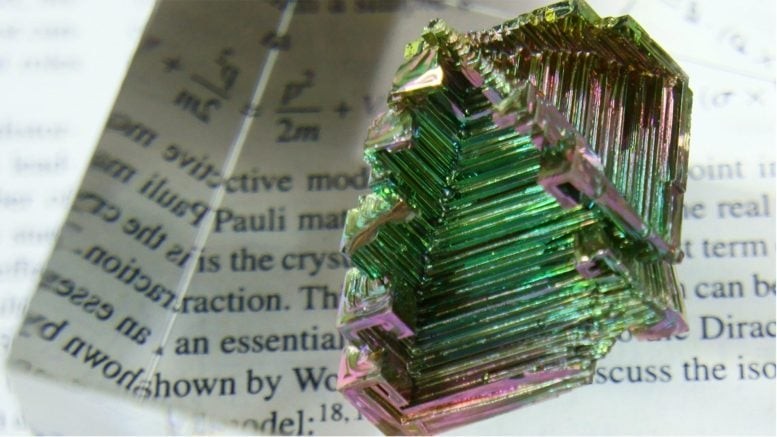
Figure 1. Quantum Secrets of Bismuth Revealed by Mysterious Material.
He explains, “Among the many properties of bismuth I’ve investigated, I was the first to discover that its crystal structure spontaneously alters due to surface relaxation. This finding made me question whether such relaxation could influence the material’s topological properties.” Figure 1 shows Quantum Secrets of Bismuth Revealed by Mysterious Material.
Motivated by this insight, the Kobe University researcher and his team turned to computer simulations to model electron behavior in bismuth. They incorporated the structural changes near the surface into their models to explore their potential impact on the material’s topological character.
Their findings, now published in Physical Review B, suggest that surface relaxation in bismuth crystals may cause the material to appear topological at the surface—even though its bulk remains non-topological.
“Until now, material topology has been understood through the principle of ‘bulk-edge correspondence,’ which assumes that surface characteristics reflect those of the bulk,” Fuseya explains. “However, our research shows that this fundamental principle can, in fact, be violated.”
A New Phenomenon: Topological Blocking
“Our proposal—that surface relaxation can disrupt bulk-edge correspondence—is not unique to bismuth; it can be extended to other systems as well,” the Kobe University team writes in their paper. They’ve termed this newly identified effect “topological blocking,” suggesting it could emerge in a wide range of materials.
“The most important goal in topological materials science is accurately identifying a material’s topology,” adds Fuseya, underscoring the broader significance of their findings for the entire field.
For Fuseya, a long-time admirer of bismuth, the discovery is also deeply personal. “Bismuth has been the foundation for many breakthroughs,” he reflects. “History shows that once a phenomenon is discovered in bismuth, similar effects often follow in other materials. I’m delighted that yet another discovery has been added to that tradition.”
What Makes Bismuth So Mysterious?
Bismuth is a heavy metal known for its unique physical properties—it's brittle, shiny, and has a low thermal conductivity. But what really makes it intriguing to scientists is how electrons behave inside it. Despite being a well-known element, bismuth continues to surprise researchers with its unusual quantum behaviors, especially near its surface. These quirks have made it a favorite in the study of topological materials—materials that exhibit strange, robust behaviors rooted in quantum physics.
The Basics of Topology in Materials
Topology, in the context of materials science, isn’t about shapes—it’s about how the electronic structure of a material behaves under deformation. A "topological material" hosts special surface states that are protected by the properties of the material's interior (bulk). The principle of bulk-edge correspondence suggests that if a material is topological in the bulk, the surface will reflect that—and vice versa. This principle has been a cornerstone in understanding quantum materials.
Bismuth Breaks the Rules
Researchers at Kobe University, led by physicist Fuseya, made a startling discovery: bismuth’s surface appears to behave like a topological material, even though its bulk is not topological. How is that possible? The answer lies in something called surface relaxation—a spontaneous change in the crystal structure near the surface. This subtle shift alters how electrons behave, creating the illusion of topological behavior where none exists in the bulk. This finding challenges the long-held bulk-edge correspondence principle.
Introducing 'Topological Blocking'
The team coined a new term for this phenomenon: topological blocking. It describes a scenario where surface effects mask the true (non-topological) nature of the material underneath. What’s more, this effect might not be unique to bismuth. The researchers suggest it could apply to other materials as well, changing how scientists classify and study quantum materials across the board. This could have ripple effects in technologies that rely on topological properties, such as quantum computing or advanced electronics.
The Legacy of Bismuth in Quantum Discoveries
Bismuth has long played a starring role in the discovery of new physical phenomena, from early studies in thermoelectric effects to spintronics and now topology. For Fuseya, who has dedicated years to studying this material, the discovery of topological blocking is a personal and scientific milestone. He believes that, as with past discoveries in bismuth, this finding could lead to similar revelations in other elements—pushing the boundaries of materials science and quantum physics even further.
Source:SciTECHDaily
Cite this article:
Priyadharshini S (2025), Mysterious Material Unveils Bismuth’s Quantum Secrets, AnaTechMaz, pp.223
Recent Post
-

Physicists Unveil the First Room-Temperature 2D Altermagnet
Despite extensive theoretical and experimental research into unconventional....
-
“Zangenite” – Scientists Uncover Newly Discovered Hollow Crystal Structure
Crystals are solids formed when particles arrange themselves....
-
Cerium Shines Yellow: Chemists Discover New Behaviors in Rare Earth Elements
In rare earth elements, luminescence arises from electron transitions...
-
New Fungus-Based Material: Biodegradable, Edible and Livingn
For their research, the team selected a specific strain of the split-gill mushroom...
-

How to Overcome Bottlenecks in CO2 Capture and Conversion
Efficiently removing carbon dioxide from the atmosphere is widely.....
-

“Superwood” — 50% Stronger Than Steel — Arriving This Year
Maryland-based startup Invent Wood is gearing up to mass-produce....
-

MIT Physicists Unveil New Superconductor That Also Acts as A Magnet
Graphite consists of numerous layers of graphene—atom-thin....
-

Dry Electrode Innovation Doubles Battery Efficiency
A research team at the University of Adelaide has unveiled a breakthrough in energy...
-

Chinese Automaker-Backed Company Launches Solid-State Batteries with 136 Wh/lb Energy Density
Anhui Anwa New Energy Technology,...
-

Video: Cyborg Beetles with Backpacks May Help Locate Disaster Survivors
Researchers at the University of Queensland have transformed...
-

New Breakthrough: Scientists Transform Insulator into a Semiconductor
At the molecular level, silicones consist of a backbone of alternating....
-

Revolutionary Material Increases Solar Panel Output and Lifespan
As the global push for green energy intensifies, solar power remains a...
-
Mysterious Material Unveils Bismuth’s Quantum Secrets
Fuseya’s deep commitment to studying bismuth led him to explore phenomena....
-

A New Reign in Propylene Production: Cobalt Catalyst Surpasses Precious Metals
Chinese Academy of Sciences, in collaboration with other researchers...
-
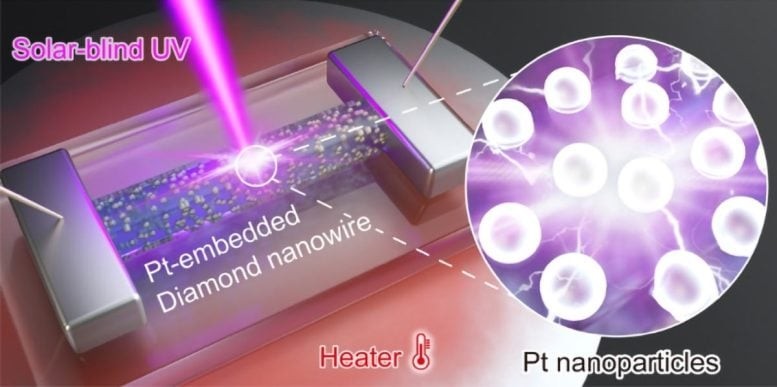
Breakthrough in Solar-Blind Technology: Diamond Nanowires Establish a New Standard
These nanowires achieve a remarkable responsivity of 68.5 A/W under 220...