

Revolutionary Material Increases Solar Panel Output and Lifespan
The Need for Passive Cooling
As the global push for green energy intensifies, solar power remains a cornerstone—accounting for over 75% of renewable energy installations. Yet, ensuring solar panels deliver reliable, long-lasting energy is a major challenge.
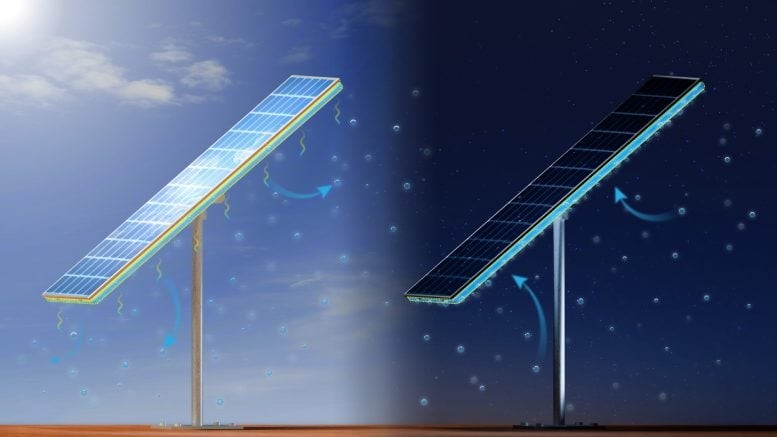
Figure 1. New Tech Supercharges Solar Panels for Longer Use.
Currently, commercial panels convert only about 20% of sunlight into electricity; the remainder is either reflected or absorbed as heat. This heat buildup not only reduces performance but also shortens the panel's lifespan, leading to more frequent replacements. While conventional cooling systems like fans or pumps can help, they consume energy—undermining solar’s eco-friendly promise. Figure 1 shows New Tech Supercharges Solar Panels for Longer Use.
Passive cooling offers a sustainable alternative. “We specialize in materials that enable passive cooling,” said KAUST Professor Qiaoqiang Gan, who led the study. “These materials are thin and can be integrated into systems like greenhouses and solar cells without affecting their performance.”
Field Testing in Harsh Desert and Mild Climates
In extended field trials in the Saudi desert, solar panels equipped with the new passive cooling material operated 9.4°C cooler than untreated panels. This temperature reduction led to over a 12% increase in power output, a 200% boost in lifespan, and nearly 20% lower electricity generation costs.
To demonstrate the technology's versatility, additional tests were conducted in some of the coldest and rainiest regions of the mainland United States. The results confirmed that the passive cooling material performs effectively across a wide range of environmental conditions.
The solar cells used in testing were provided by KAUST Professor Stefaan De Wolf, whose team has consistently set world records in solar cell performance with their custom designs.
“This work is an excellent example of combining different expertise at KAUST,” said De Wolf. “We tested the new cooling technology on top-performing solar cells in multiple environments and saw excellent results in every case.”
The Solar Energy Challenge
Solar power is leading the renewable energy revolution, but traditional panels face efficiency and durability issues. Only about 20% of sunlight is converted to electricity; the rest becomes heat, which degrades the panels over time.
Excess heat reduces performance and shortens lifespan, making solar power more expensive and less sustainable.
Why Cooling Matters
Conventional cooling solutions like fans or water-based systems require electricity, which contradicts the energy-saving goals of solar.
Passive cooling—a method that reduces heat without using power—is a game-changer for solar panel efficiency and sustainability.
The Breakthrough Material
Researchers at KAUST developed an ultra-thin composite material that passively cools solar panels by reflecting sunlight and radiating heat away.
This material can be applied without interfering with the panel’s ability to absorb light, making it ideal for retrofitting existing systems.
Tested in Desert and Rain
Field tests in the Saudi desert showed panels with this cooling material stayed 9.4°C cooler, boosting power output by 12%, lifespan by 200%, and reducing electricity costs by nearly 20%. Similar success was seen in cold and rainy U.S. regions, proving its global adaptability.
A Leap Forward for Green Energy
By combining world-class solar cells with passive cooling technology, KAUST researchers have created a highly efficient and durable solution for solar energy production.
This innovation could significantly reduce waste, cost, and environmental impact—bringing us closer to a truly sustainable energy future.
Source:SciTECHDaily
Cite this article:
Priyadharshini S (2025), Revolutionary Material Increases Solar Panel Output and Lifespan, AnaTechMaz, pp.222
Recent Post
-

Physicists Unveil the First Room-Temperature 2D Altermagnet
Despite extensive theoretical and experimental research into unconventional....
-
“Zangenite” – Scientists Uncover Newly Discovered Hollow Crystal Structure
Crystals are solids formed when particles arrange themselves....
-

Cerium Shines Yellow: Chemists Discover New Behaviors in Rare Earth Elements
In rare earth elements, luminescence arises from electron transitions...
-
New Fungus-Based Material: Biodegradable, Edible and Livingn
For their research, the team selected a specific strain of the split-gill mushroom...
-
How to Overcome Bottlenecks in CO2 Capture and Conversion
Efficiently removing carbon dioxide from the atmosphere is widely.....
-

“Superwood” — 50% Stronger Than Steel — Arriving This Year
Maryland-based startup Invent Wood is gearing up to mass-produce....
-

MIT Physicists Unveil New Superconductor That Also Acts as A Magnet
Graphite consists of numerous layers of graphene—atom-thin....
-

Dry Electrode Innovation Doubles Battery Efficiency
A research team at the University of Adelaide has unveiled a breakthrough in energy...
-

Chinese Automaker-Backed Company Launches Solid-State Batteries with 136 Wh/lb Energy Density
Anhui Anwa New Energy Technology,...
-

Video: Cyborg Beetles with Backpacks May Help Locate Disaster Survivors
Researchers at the University of Queensland have transformed...
-
New Breakthrough: Scientists Transform Insulator into a Semiconductor
At the molecular level, silicones consist of a backbone of alternating....
-
Revolutionary Material Increases Solar Panel Output and Lifespan
As the global push for green energy intensifies, solar power remains a...
-
Mysterious Material Unveils Bismuth’s Quantum Secrets
Fuseya’s deep commitment to studying bismuth led him to explore phenomena....
-
A New Reign in Propylene Production: Cobalt Catalyst Surpasses Precious Metals
Chinese Academy of Sciences, in collaboration with other researchers...
-
Breakthrough in Solar-Blind Technology: Diamond Nanowires Establish a New Standard
These nanowires achieve a remarkable responsivity of 68.5 A/W under 220...