

New Breakthrough: Scientists Transform Insulator into a Semiconductor
Molecular Structure and Conductivity Discovery
At the molecular level, silicones consist of a backbone of alternating silicon and oxygen atoms (Si–O–Si), with carbon-based organic groups attached to the silicon atoms. As these polymer chains link together through a process called cross-linking, they form various three-dimensional structures that influence the material’s physical properties, such as strength and solubility.
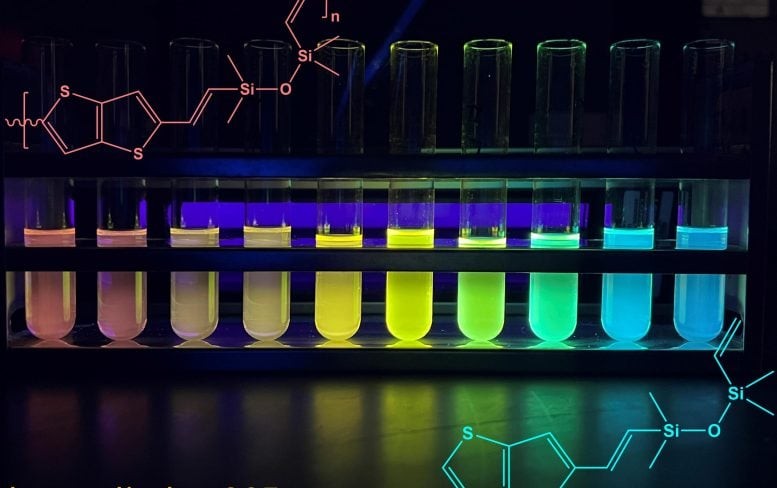
Figure 1. Breakthrough Discovery: Scientists Turn Insulator into Semiconductor.
While investigating different cross-linking patterns in silicone, the research team unexpectedly discovered the potential for electrical conductivity in a specific copolymer—a polymer made up of two distinct repeating units. In this case, the copolymer included both cage-like and linear silicone structures. Figure 1 shows Breakthrough Discovery: Scientists Turn Insulator into Semiconductor.
The potential for conductivity in the silicone copolymer stems from how electrons move across Si–O–Si bonds through overlapping orbitals. In semiconductors, there are typically two states: a ground state, which doesn’t conduct electricity, and an excited (or conducting) state, where electrons gain enough energy to jump to higher orbitals that are connected across the material—much like in metals.
Ordinarily, Si–O–Si bond angles prevent this kind of electron movement. With bond angles around 110°, the atoms are far from being aligned in a straight 180° line, limiting orbital overlap. However, in the newly discovered silicone copolymer, the Si–O–Si angles are wider—about 140° in the ground state—and stretch further to 150° in the excited state. This geometric shift allows for better orbital alignment, effectively creating a pathway for electrical charge to flow.
“This enables an unexpected interaction between electrons across multiple bonds, including Si–O–Si, in these copolymers,” said Laine. “The longer the chain length, the more easily electrons can travel, reducing the energy required to absorb light and emit it at lower energies.”
Color Spectrum and Chain Length Control
The semiconducting behavior of the silicone copolymers also influences the range of colors they emit. Electrons transition between the ground and excited states by absorbing and releasing photons—particles of light. The color of the emitted light depends on the length of the copolymer chains, which Laine’s team can precisely control. Longer chains result in smaller energy jumps, producing lower-energy photons and a reddish glow. In contrast, shorter chains require electrons to make larger energy transitions, emitting higher-energy light toward the blue end of the spectrum.
To illustrate the link between copolymer chain length and light absorption and emission, the researchers separated the copolymers by chain length and placed them in test tubes arranged from longest to shortest. When exposed to ultraviolet (UV) light, the tubes displayed a full spectrum of colors—each glowing differently based on the energy levels at which they absorb and emit light.
This vibrant color display is especially remarkable, as silicones have traditionally been known only for their transparency or white appearance. Their insulating nature has made them largely incapable of absorbing visible light—until now.
“We’re taking a material everyone thought was electrically inert and giving it a new life—one that could power the next generation of soft, flexible electronics,” said Zijing (Jackie) Zhang, a doctoral student in materials science and engineering at the University of Michigan and lead author of the study.
Source:SciTECHDaily
Cite this article:
Priyadharshini S (2025), New Breakthrough: Scientists Transform Insulator into a Semiconductor, AnaTechMaz, pp.221
Recent Post
-

Physicists Unveil the First Room-Temperature 2D Altermagnet
Despite extensive theoretical and experimental research into unconventional....
-
“Zangenite” – Scientists Uncover Newly Discovered Hollow Crystal Structure
Crystals are solids formed when particles arrange themselves....
-
Cerium Shines Yellow: Chemists Discover New Behaviors in Rare Earth Elements
In rare earth elements, luminescence arises from electron transitions...
-
New Fungus-Based Material: Biodegradable, Edible and Livingn
For their research, the team selected a specific strain of the split-gill mushroom...
-
How to Overcome Bottlenecks in CO2 Capture and Conversion
Efficiently removing carbon dioxide from the atmosphere is widely.....
-

“Superwood” — 50% Stronger Than Steel — Arriving This Year
Maryland-based startup Invent Wood is gearing up to mass-produce....
-

MIT Physicists Unveil New Superconductor That Also Acts as A Magnet
Graphite consists of numerous layers of graphene—atom-thin....
-
Dry Electrode Innovation Doubles Battery Efficiency
A research team at the University of Adelaide has unveiled a breakthrough in energy...
-

Chinese Automaker-Backed Company Launches Solid-State Batteries with 136 Wh/lb Energy Density
Anhui Anwa New Energy Technology,...
-
Video: Cyborg Beetles with Backpacks May Help Locate Disaster Survivors
Researchers at the University of Queensland have transformed...
-
New Breakthrough: Scientists Transform Insulator into a Semiconductor
At the molecular level, silicones consist of a backbone of alternating....
-
Revolutionary Material Increases Solar Panel Output and Lifespan
As the global push for green energy intensifies, solar power remains a...
-
Mysterious Material Unveils Bismuth’s Quantum Secrets
Fuseya’s deep commitment to studying bismuth led him to explore phenomena....
-
A New Reign in Propylene Production: Cobalt Catalyst Surpasses Precious Metals
Chinese Academy of Sciences, in collaboration with other researchers...
-
Breakthrough in Solar-Blind Technology: Diamond Nanowires Establish a New Standard
These nanowires achieve a remarkable responsivity of 68.5 A/W under 220...